
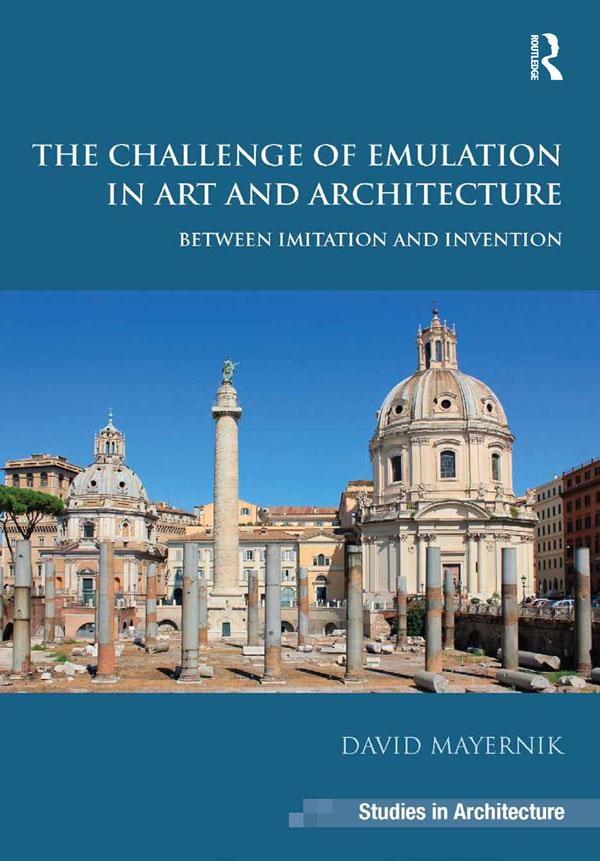
Emulation is a challenging middle ground between imitation and invention. The idea of rivaling by means of imitation, as old as the Aenead and as modern as Michelangelo, fit neither the pessimistic deference of the neoclassicists nor the revolutionary spirit of the Romantics. Emulation thus disappeared along with the Renaissance humanist tradition, but it is slowly being recovered in the scholarship of Roman art. It remains to recover emulation for the Renaissance itself, and to revivify it for modern practice. Mayernik argues that it was the absence of a coherent understanding of emulation that fostered the fissuring of artistic production in the later eighteenth century into those devoted to copying the past and those interested in continual novelty, a situation solidified over the course of the nineteenth century and mostly taken for granted today. This book is a unique contribution to our understanding of the historical phenomenon of emulation, and perhaps more importantly a timely argument for its value to contemporary practice.
Pay easily by card, Klarna, Apple Pay or Google Pay. Not happy? You always have a 14-day money-back guarantee. Read more in our terms. If you have any questions, email us at hello@memmo.org.
Memmo makes studying easier – wherever you are in the world. We bring your course books and smart study tools together in one place: summaries, quizzes, podcasts and flashcards. Plus Ted, your study buddy who answers anything you wonder. Over 75,000 students already study here – built to help you learn faster and stress less.
You might also like
Buy the book0