
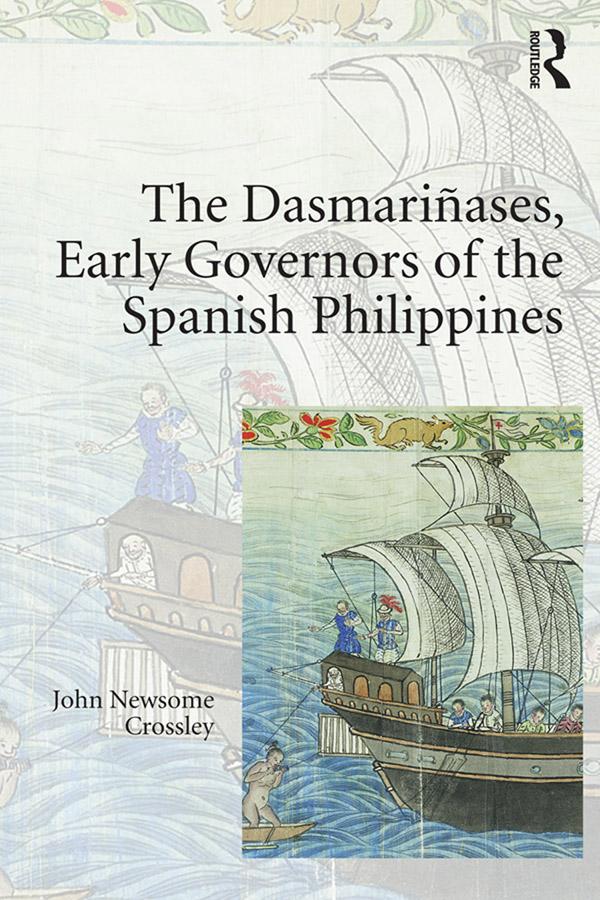
Building upon Dr Crossley's 2011 book ('Hernando de los Ríos Coronel and the Spanish Philippines in the Golden Age') this new work further expands our understanding of the Spanish Philippines by looking at Gómez Pérez Dasmariñas and his son Luis, successive governors from 1589. Drawing upon a rich selection of documents from the official Spanish archives (principally the Archivo General de Indias, Seville) and earlier histories, the book also utilizes an unpublished 628 page manuscript in the Lilly Library at Indiana University to provide many details not available elsewhere. In so doing the book reveals the complex situation that existed in the Philippines and how the two governors (and the people around them) threw out, and responded to, challenges from a variety of different cultures. Born into a rich family in north-western Spain about 1539, Gómez Pérez Dasmariñas had a distinguished career in Spain before being selected in 1588, to become the new governor of the Philippines. A devout Christian intent on converting the new country in which he found himself, Dasmariñas epitomised the Spanish state's increasing emphasis on its missionary role. He departed Spain with clear instructions from the king, which had been drawn up in response to requests from the Philippines, asking for a better governor and one of higher moral standards than they had previously enjoyed. From the evidence found in his sources, John Newsome Crossley argues that Dasmariñas largely measured up to these requirements. Killed in an attempt to capture the fort at Ternate in the Moluccas in 1593, Gómez Pérez Dasmariñas was succeeded by his son Luis. After being replaced himself as governor in 1596, Luis remained in the Philippines until his death in the Chinese rebellion of 1603 in Manila. In revealing the story of the two Dasmariñas governors, this book further illuminates the history of the Spanish Philippines and its relationship both with the wider Spanish empire, and the regional powers including China, Japan, Siam and Cambodia.
Pay easily by card, Klarna, Apple Pay or Google Pay. Not happy? You always have a 14-day money-back guarantee. Read more in our terms. If you have any questions, email us at hello@memmo.org.
Memmo makes studying easier – wherever you are in the world. We bring your course books and smart study tools together in one place: summaries, quizzes, podcasts and flashcards. Plus Ted, your study buddy who answers anything you wonder. Over 50,000 students already study here – built to help you learn faster and stress less.