
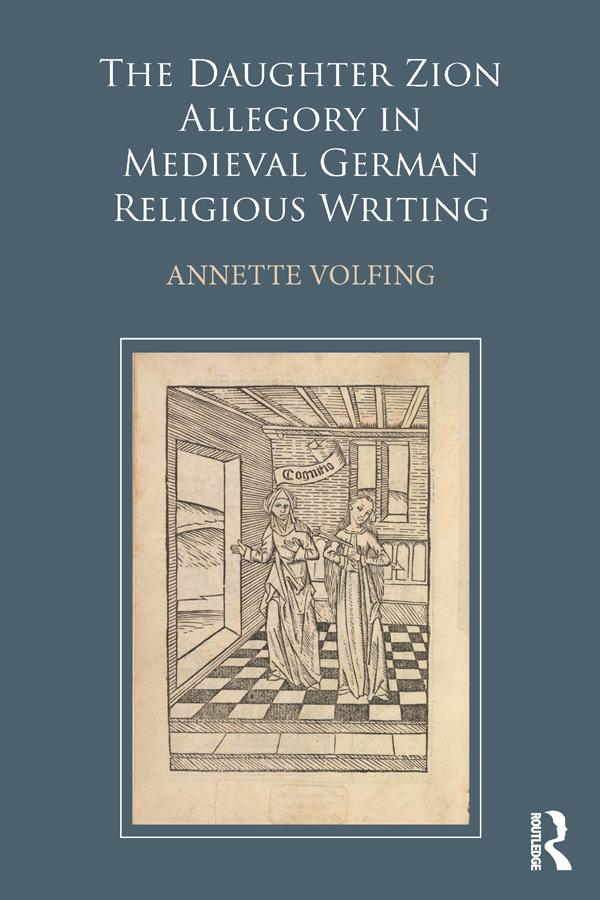
The Daughter Zion allegory represents a particular narrative articulation of the paradigm of bridal mysticism deriving from the Song of Songs, the core element of which is the quest of Daughter Zion for a worthy object of love. Examining medieval German religious writing (verse and prose) and Dutch prose works, Annette Volfing shows that this storyline provides an excellent springboard for investigating key aspects of medieval religious and literary culture. In particular, she argues, the allegory lends itself to an exploration of the medieval sense of self; of the scope of human agency within the mystical encounter; of the gendering of the religious subject; of conceptions of space and enclosure; and of fantasies of violence and aggression. Volfing suggests that Daughter Zion adaptations increasingly tended to empower the religious subject to seek a more immediate relationship with the divine and to embrace a wider range of emotions: the mediating personifications are gradually eliminated in favour of a model of religious experience in which the human subject engages directly with Christ. Overall, the development of the allegory from the twelfth to the fifteenth centuries marks the striving towards a greater sense of equality and affective reciprocity with the divine, within the context of an erotic union.
Pay easily by card, Klarna, Apple Pay or Google Pay. Not happy? You always have a 14-day money-back guarantee. Read more in our terms. If you have any questions, email us at hello@memmo.org.
Memmo makes studying easier – wherever you are in the world. We bring your course books and smart study tools together in one place: summaries, quizzes, podcasts and flashcards. Plus Ted, your study buddy who answers anything you wonder. Over 50,000 students already study here – built to help you learn faster and stress less.
You might also like
Buy the book0