
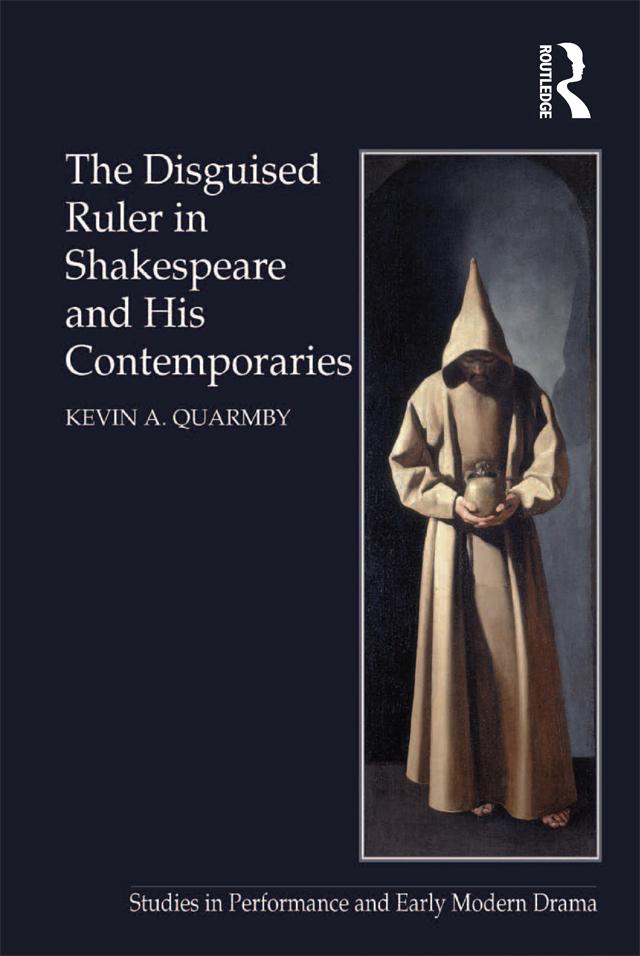
In the early seventeenth century, the London stage often portrayed a ruler covertly spying on his subjects. Traditionally deemed 'Jacobean disguised ruler plays', these works include Shakespeare's Measure for Measure, Marston's The Malcontent and The Fawn, Middleton's The Phoenix, and Sharpham's The Fleer. Commonly dated to the arrival of James I, these plays are typically viewed as synchronic commentaries on the Jacobean regime. Kevin A. Quarmby demonstrates that the disguised ruler motif actually evolved in the 1580s. It emerged from medieval folklore and balladry, Tudor Chronicle history and European tragicomedy. Familiar on the Elizabethan stage, these incognito rulers initially offered light-hearted, romantic entertainment, only to suffer a sinister transformation as England awaited its ageing queen's demise. The disguised royal had become a dangerously voyeuristic political entity by the time James assumed the throne. Traditional critical perspectives also disregard contemporary theatrical competition. Market demands shaped the repertories. Rivalry among playing companies guaranteed the motif's ongoing vitality. The disguised ruler's presence in a play reassured audiences; it also facilitated a subversive exploration of contemporary social and political issues. Gradually, the disguised ruler's dramatic currency faded, but the figure remained vibrant as an object of parody until the playhouses closed in the 1640s.
Pay easily by card, Klarna, Apple Pay or Google Pay. Not happy? You always have a 14-day money-back guarantee. Read more in our terms. If you have any questions, email us at hello@memmo.org.
Memmo makes studying easier – wherever you are in the world. We bring your course books and smart study tools together in one place: summaries, quizzes, podcasts and flashcards. Plus Ted, your study buddy who answers anything you wonder. Over 75,000 students already study here – built to help you learn faster and stress less.
You might also like
Buy the book0