
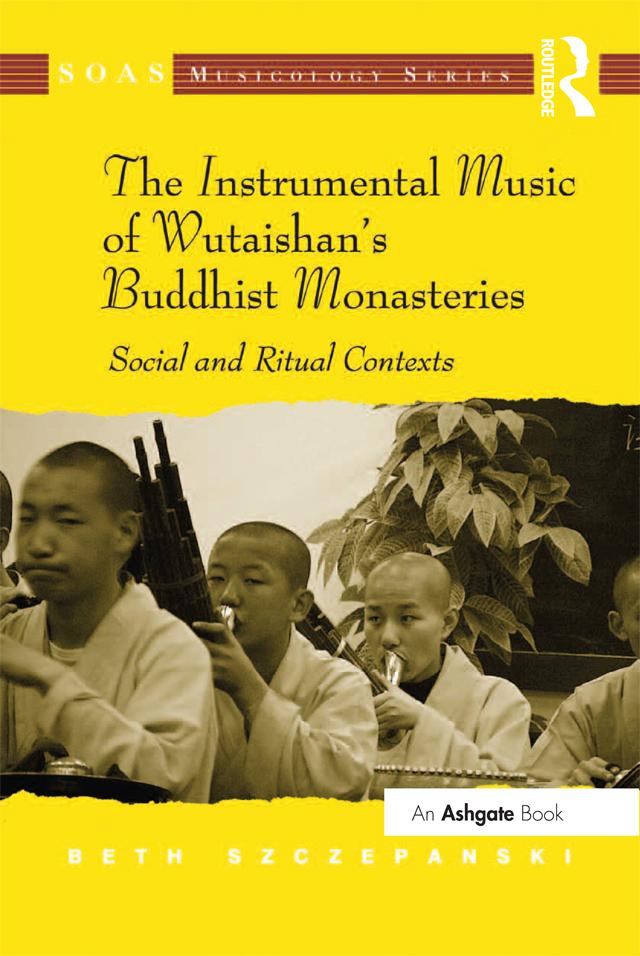
Beth Szczepanski examines how traditional and modern elements interact in the current practice, reception and functions of wind music, or shengguan, at monasteries in Wutaishan, one of China's four holy mountains of Buddhism. The book provides an invaluable insight into the political and economic history of Wutaishan and its music, as well as the instrumentation, notation, repertoires, transmission and ritual function of monastic music at Wutaishan, and how that music has adapted to China's current economic, political and religious climate. The book is based on extensive field research at Wutaishan from 2005 to 2007, including interviews with monks, nuns, pilgrims and tourists. The author learned to play the sheng mouth organ and guanzi double-reed pipe, and recorded dozens of performances of monastic and lay music. The first extensive examination of Wutaishan's music by a Western scholar, the book brings a new perspective to a topic long favored by Chinese musicologists. At the same time, the book provides the non-musical scholar with an engaging exploration of the historical, political, economic and cultural forces that shape musical and religious practices in China.
Pay easily by card, Klarna, Apple Pay or Google Pay. Not happy? You always have a 14-day money-back guarantee. Read more in our terms. If you have any questions, email us at hello@memmo.org.
Memmo makes studying easier – wherever you are in the world. We bring your course books and smart study tools together in one place: summaries, quizzes, podcasts and flashcards. Plus Ted, your study buddy who answers anything you wonder. Over 50,000 students already study here – built to help you learn faster and stress less.
You might also like
Buy the book0