
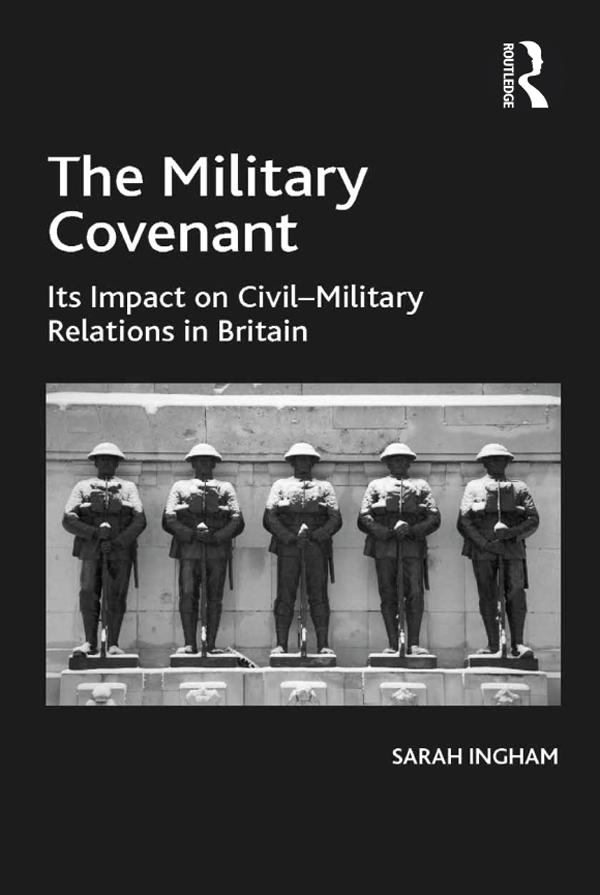
The Military Covenant states that in exchange for their military service and their willingness to make the ultimate sacrifice, soldiers should receive the nation’s support. Exploring the concept’s invention by the Army in the late 1990s, its migration to the civilian sphere from 2006 and its subsequent entrenchment in public policy, Ingham seeks to understand the Covenant’s progress from the esoteric confines of Army doctrine to national recognition. Drawing on interviews with senior commanders, policy-makers and representatives of Forces’ charities, this study highlights how the Army deployed the Military Covenant to convey the pressure on the institution caused by the concurrent combat operations in Iraq and Afghanistan. While achieving a better deal for soldiers whose sacrifice became all too apparent, the Military Covenant licensed unprecedented incursion into politics by senior commanders, enabling them to out-manoeuvre the Blair-Brown governments and to challenge the existing norms within Britain’s civil-military relationship. As British Forces prepare to leave Afghanistan, this study considers the value Britain accords to military service and whether civilian society will continue to uphold its Covenant with those who have served the nation.
Pay easily by card, Klarna, Apple Pay or Google Pay. Not happy? You always have a 14-day money-back guarantee. Read more in our terms. If you have any questions, email us at hello@memmo.org.
Memmo makes studying easier – wherever you are in the world. We bring your course books and smart study tools together in one place: summaries, quizzes, podcasts and flashcards. Plus Ted, your study buddy who answers anything you wonder. Over 50,000 students already study here – built to help you learn faster and stress less.
You might also like
Buy the book0