
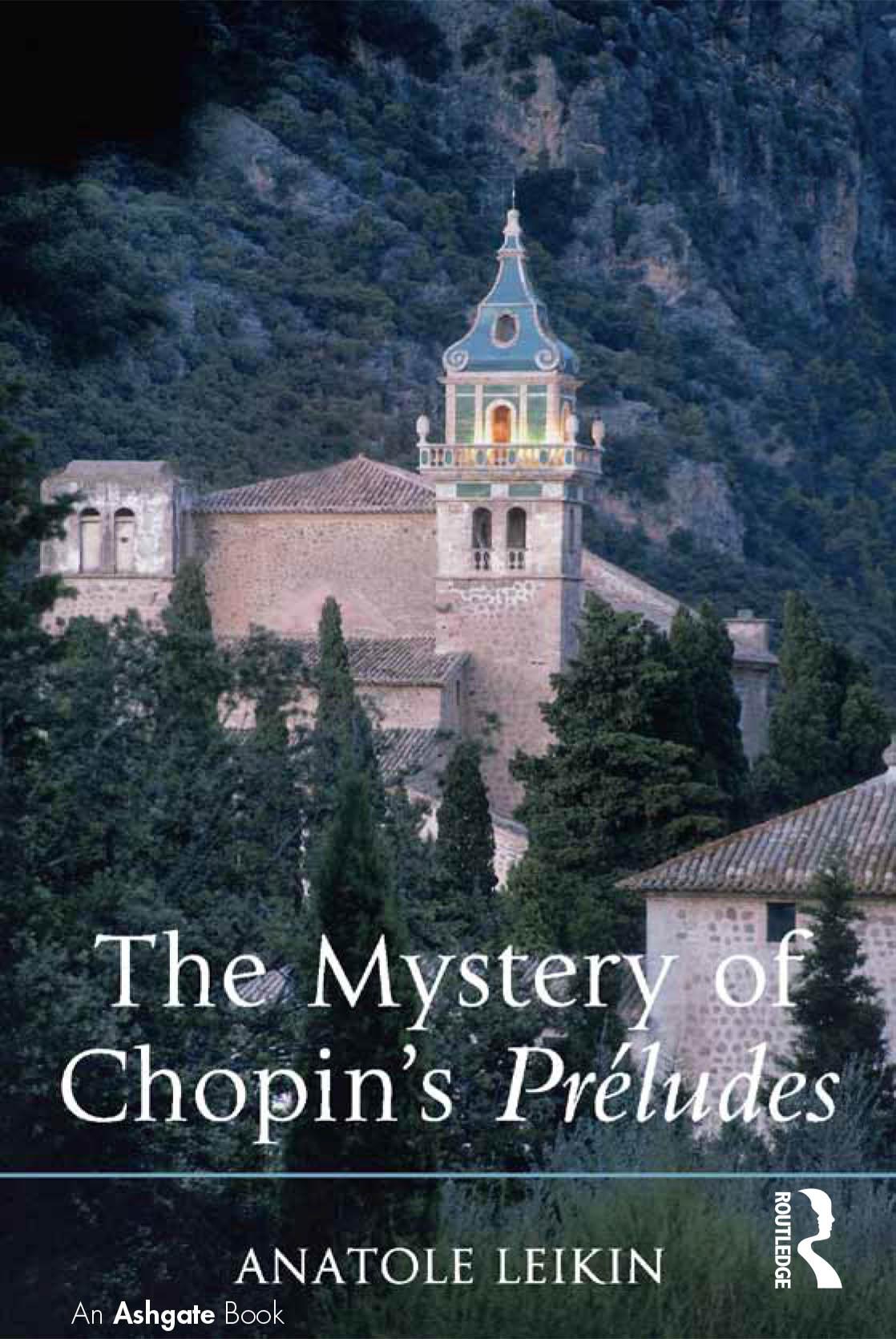
Chopin's twenty-four Préludes remain as mysterious today as when they were newly published. What prompted Franz Liszt and others to consider Chopin's Préludes to be compositions in their own right rather than introductions to other works? What did set Chopin's Préludes so drastically apart from their forerunners? What exactly was 'the morbid, the feverish, the repellent' that Schumann heard in Opus 28, in that 'wild motley' of 'strange sketches' and 'ruins'? Why did Liszt and another, anonymous, reviewer publicly suggest that Lamartine's poem Les Préludes served as an inspiration for Chopin's Opus 28? And, if that is indeed the case, how did the poem affect the structure and the thematic contents of Chopin's Préludes? And, lastly, is Opus 28 a random assortment of short pieces or a cohesive cycle? In this monograph, richly illustrated with musical examples, Anatole Leikin combines historical perspectives, hermeneutic and thematic analyses, and a range of practical implications for performers to explore these questions and illuminate the music of one of the best loved collections of music for the piano.
Pay easily by card, Klarna, Apple Pay or Google Pay. Not happy? You always have a 14-day money-back guarantee. Read more in our terms. If you have any questions, email us at hello@memmo.org.
Memmo makes studying easier – wherever you are in the world. We bring your course books and smart study tools together in one place: summaries, quizzes, podcasts and flashcards. Plus Ted, your study buddy who answers anything you wonder. Over 50,000 students already study here – built to help you learn faster and stress less.
You might also like
Buy the book0