
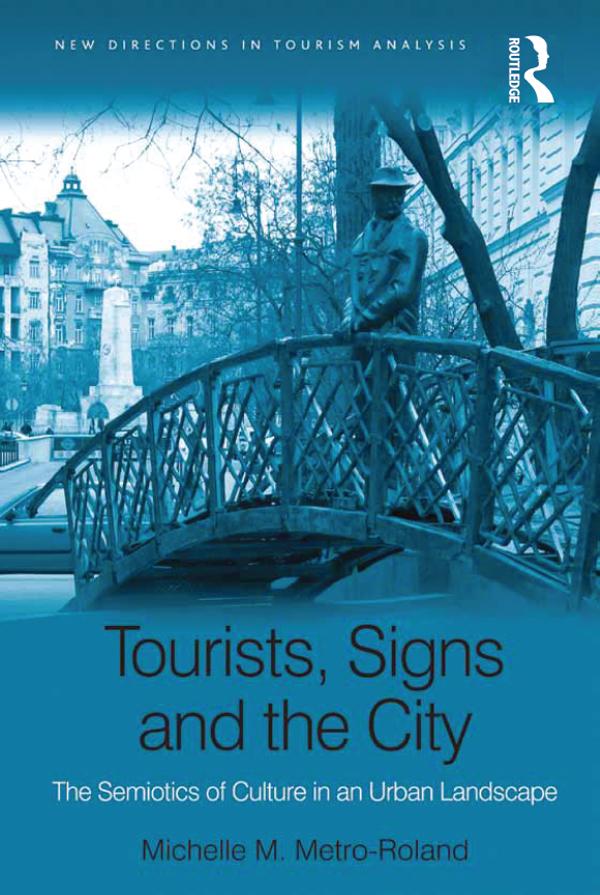
Drawing upon the literature of landscape geography, tourism studies, cultural studies, visual studies and philosophy, this book offers a multi-disciplinary approach to understanding the interaction between urban environments and tourists. This is a necessary prerequisite for cities as they make themselves into enticing destinations and compete for tourists' attention. It argues that tourists make sense of, and draw meaningful conclusions about, the places in which they tour based upon the interpretation of the signs or elements encountered within the built environment, elements such as graffiti and lamp posts. The writings of the American pragmatist Charles S. Peirce on interpretation provide the theoretical model for explaining the way in which mind and world, or thoughts and objects, result in tourists interacting with place. This theoretical framework elucidates three applied studies undertaken with foreign visitors to the Hungarian capital of Budapest. Based upon extensive ethnographic field work, these studies focus on tourists' interpretation of the urban landscape, with particular attention paid to the encounters with national culture, the role of architecture and the importance of the prosaic in urban tourism.
Pay easily by card, Klarna, Apple Pay or Google Pay. Not happy? You always have a 14-day money-back guarantee. Read more in our terms. If you have any questions, email us at hello@memmo.org.
Memmo makes studying easier – wherever you are in the world. We bring your course books and smart study tools together in one place: summaries, quizzes, podcasts and flashcards. Plus Ted, your study buddy who answers anything you wonder. Over 75,000 students already study here – built to help you learn faster and stress less.
You might also like
Buy the book0