
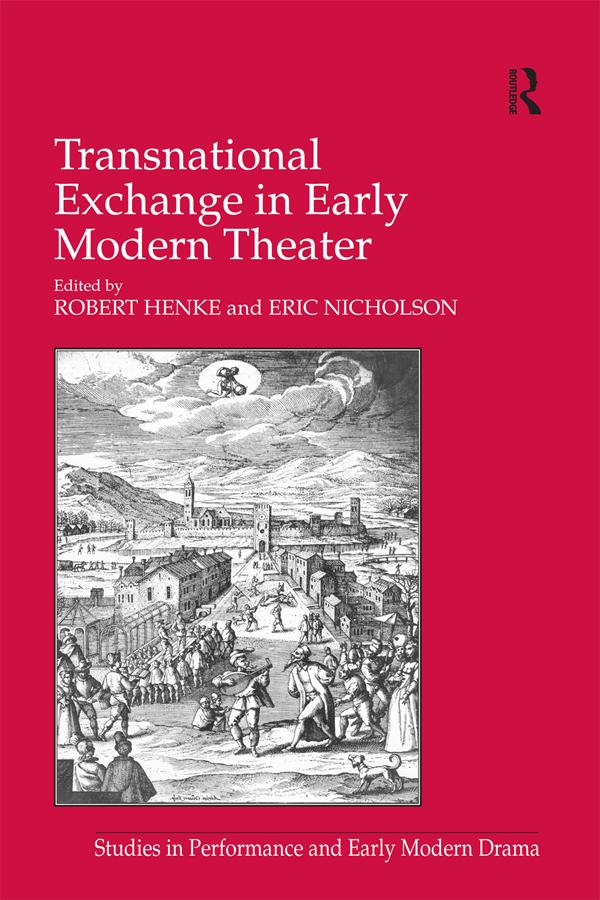
Emphasizing a performative and stage-centered approach, this book considers early modern European theater as an international phenomenon. Early modern theater was remarkable both in the ways that it represented material and symbolic exchanges across political, linguistic, and cultural borders (both "national" and "regional") but also in the ways that it enacted them. Contributors study various modalities of exchange, including the material and causal influence of one theater upon another, as in the case of actors traveling beyond their own regional boundaries; generalized and systemic influence, such as the diffused effect of Italian comedy on English drama; the transmission of theoretical and ethical ideas about the theater by humanist vehicles; the implicit dialogue and exchange generated by actors playing "foreign" roles; and polyglot linguistic resonances that evoke circum-Mediterranean "cultural geographies." In analyzing theater as a medium of dialogic communication, the volume emphasizes cultural relationships of exchange and reciprocity more than unilateral encounters of hegemony and domination.
Pay easily by card, Klarna, Apple Pay or Google Pay. Not happy? You always have a 14-day money-back guarantee. Read more in our terms. If you have any questions, email us at hello@memmo.org.
Memmo makes studying easier – wherever you are in the world. We bring your course books and smart study tools together in one place: summaries, quizzes, podcasts and flashcards. Plus Ted, your study buddy who answers anything you wonder. Over 75,000 students already study here – built to help you learn faster and stress less.
You might also like
Buy the book0