
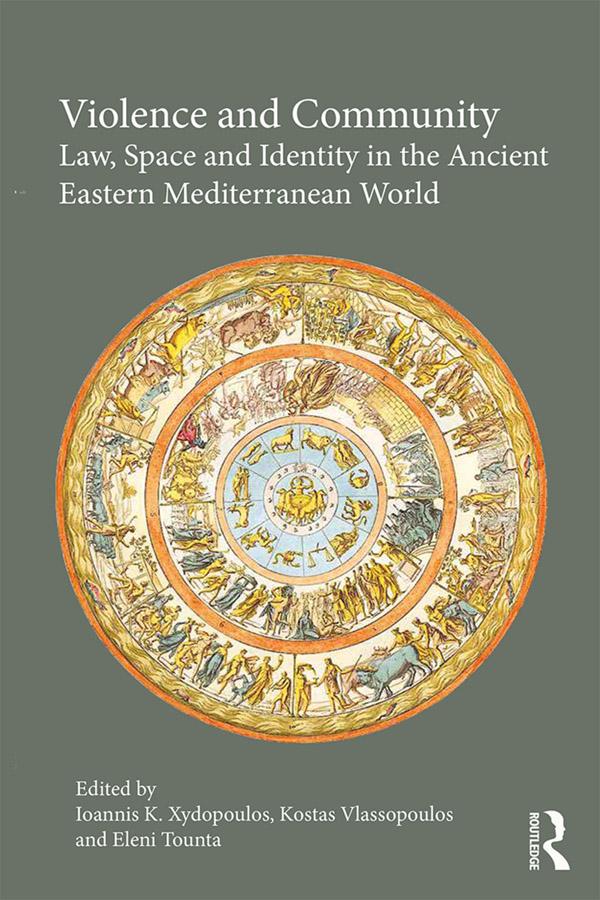
Violence and community were intimately linked in the ancient world. While various aspects of violence have been long studied on their own (warfare, revolution, murder, theft, piracy), there has been little effort so far to study violence as a unified field and explore its role in community formation. This volume aims to construct such an agenda by exploring the historiography of the study of violence in antiquity, and highlighting a number of important paradoxes of ancient violence. It explores the forceful nexus between wealth, power and the passions by focusing on three major aspects that link violence and community: the attempts of communities to regulate and canalise violence through law, the constitutive role of violence in communal identities, and the ways in which communities dealt with violence in regards to private and public space, landscapes and territories. The contributions to this volume range widely in both time and space: temporally, they cover the full span from the archaic to the Roman imperial period, while spatially they extend from Athens and Sparta through Crete, Arcadia and Macedonia to Egypt and Israel.
Pay easily by card, Klarna, Apple Pay or Google Pay. Not happy? You always have a 14-day money-back guarantee. Read more in our terms. If you have any questions, email us at hello@memmo.org.
Memmo makes studying easier – wherever you are in the world. We bring your course books and smart study tools together in one place: summaries, quizzes, podcasts and flashcards. Plus Ted, your study buddy who answers anything you wonder. Over 75,000 students already study here – built to help you learn faster and stress less.