
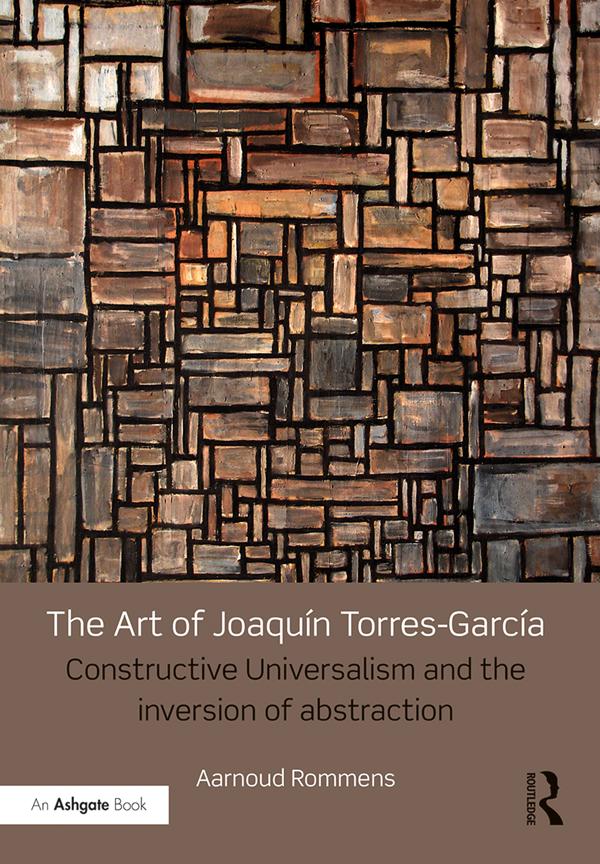
Intertwining art history, aesthetic theory, and Latin American studies, Aarnoud Rommens challenges contemporary Eurocentric revisions of the history of abstraction through this study of the Uruguayan artist Joaquín Torres-García. After studying and painting (for decades) in Europe, Torres-García returned in 1934 to his native home, Montevideo, with the dream of reawakening and revitalizing what he considered the true indigenous essence of Latin American art: "Abstract Spirit." Rommens rigorously analyses the paradoxes of the painter's aesthetic-philosophical doctrine of Constructive Universalism as it sought to adapt European geometric abstraction to the Americas. Whereas previous scholarship has dismissed Torres-García's theories as self-contradictory, Rommens seeks to recover their creative potential as well as their role in tracing the transatlantic routes of the avant-garde. Through the highly original method of reading Torres-García's artworks as a critique on the artist's own writings, Rommens reveals how Torres-García appropriates the colonial language of primitivism to construct the artificial image of "pure" pre-Columbian abstraction. Torres-García thereby inverts the history of art: this book teases out the important lessons of this gesture and the implications for our understanding of abstraction today.
Pay easily by card, Klarna, Apple Pay or Google Pay. Not happy? You always have a 14-day money-back guarantee. Read more in our terms. If you have any questions, email us at hello@memmo.org.
Memmo makes studying easier – wherever you are in the world. We bring your course books and smart study tools together in one place: summaries, quizzes, podcasts and flashcards. Plus Ted, your study buddy who answers anything you wonder. Over 50,000 students already study here – built to help you learn faster and stress less.