
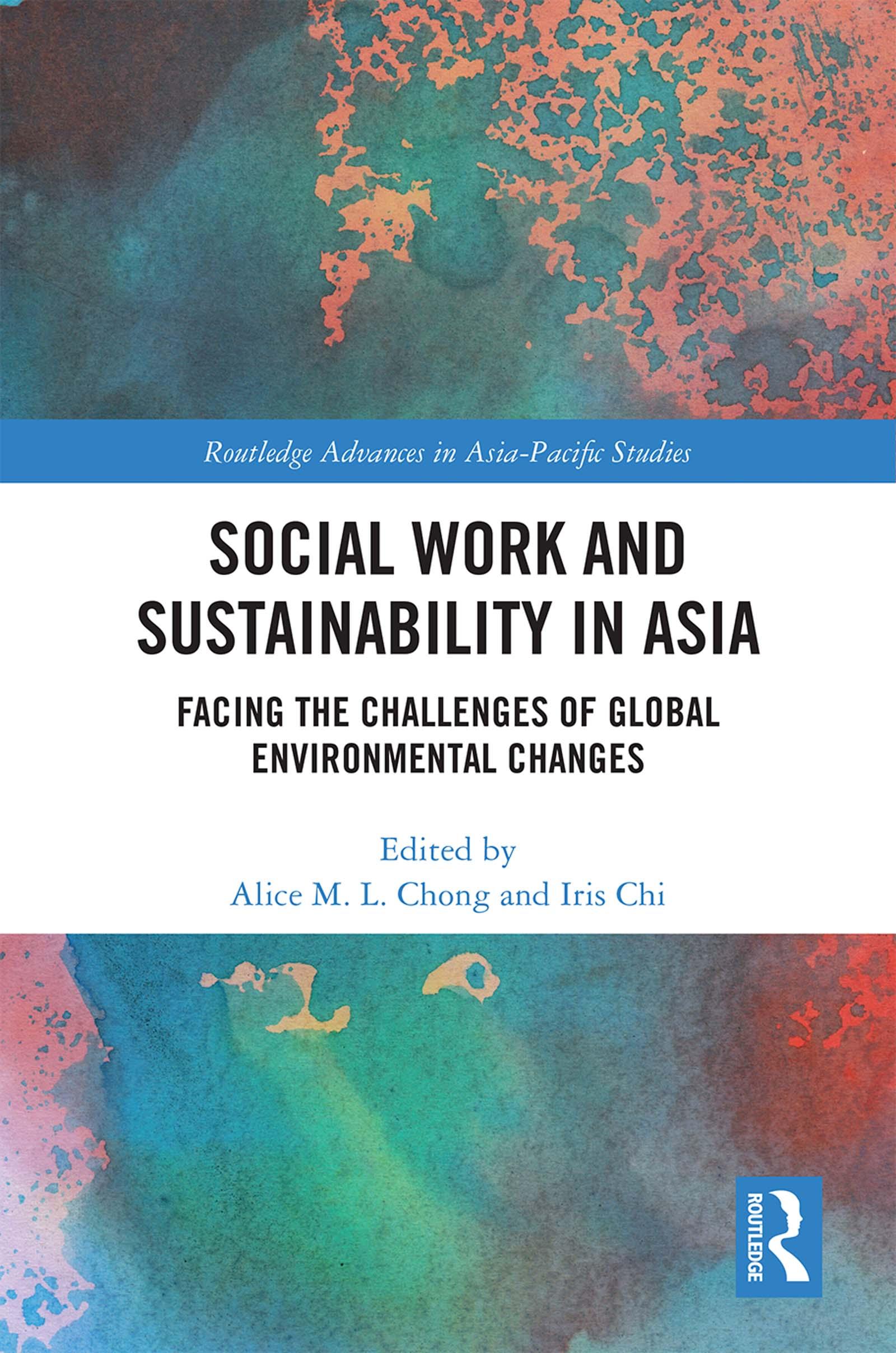
The rapid trend of globalization has brought with it a variety of sustainability challenges, including global climate change, biodiversity loss, poverty, and social inequalities, which are problems with unclear boundaries, complicated interrelated components, undefined parameters, contradictory values, and no single solution. Social work has a long-standing tradition of emphasizing the interaction of people and their environment. For this reason, the field of social work is one of the best-placed academic disciplines for studying the impact of environmental change on social systems, and should play an important role in developing strategies for mitigating and adapting to these environmental challenges. However, traditional social work tends to lack sustaining work and neglect globally interconnected social problems.
Combining case studies and country reports from around Asia with a theoretical framework for understanding sustainability concerns, this book aims to show how social work can play a valuable role in mitigating and adapting to environmental challenges and social sustainability. For social work to develop a meaningful and viable profession that addresses contemporary sustainability issues, it requires changes and transformation in paradigm, theories, strategies, social policy and social services that will facilitate a sustainable future for all mankind.
Pay easily by card, Klarna, Apple Pay or Google Pay. Not happy? You always have a 14-day money-back guarantee. Read more in our terms. If you have any questions, email us at hello@memmo.org.
Memmo makes studying easier – wherever you are in the world. We bring your course books and smart study tools together in one place: summaries, quizzes, podcasts and flashcards. Plus Ted, your study buddy who answers anything you wonder. Over 50,000 students already study here – built to help you learn faster and stress less.