
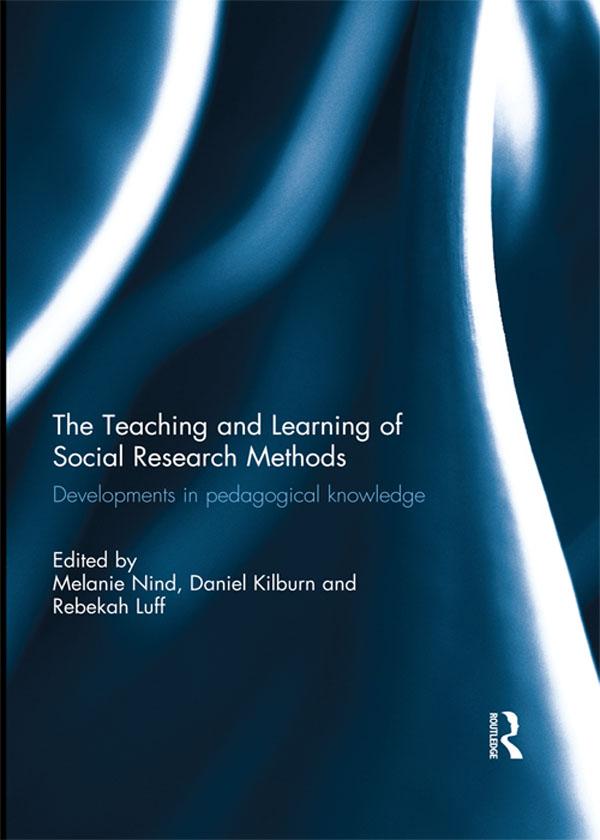
The importance of the teaching and learning of social research methods is increasingly recognised by research councils and policy bodies as crucial to the drive to increase capacity amongst the research community. The need for greater scholarly engagement with how research methods are taught and learnt is also driven by the realisation that epistemological and methodological developments have not been accompanied by a pedagogical literature or culture. Training initiatives need this pedagogic input if they are to realise the educational aspirations for methodologically skilled and competent researchers, able to apply, adapt and reflect on a range of high-level research methods and approaches. The contributors to this collection have fully engaged with this need to develop and share pedagogical knowledge in relation to the teaching of research methods. Together they span qualitative, quantitative and mixed methods, a range of disciplinary and national contexts, and face-to-face and blended teaching and learning. Through detailed examples, the collection addresses how best teaching practices develop in response to distinctive challenges that will resonate with readers; in so doing it will inspire and inform their own development.
This book was originally published as a special issue of the International Journal of Social Research Methodology.
Pay easily by card, Klarna, Apple Pay or Google Pay. Not happy? You always have a 14-day money-back guarantee. Read more in our terms. If you have any questions, email us at hello@memmo.org.
Memmo makes studying easier – wherever you are in the world. We bring your course books and smart study tools together in one place: summaries, quizzes, podcasts and flashcards. Plus Ted, your study buddy who answers anything you wonder. Over 50,000 students already study here – built to help you learn faster and stress less.