
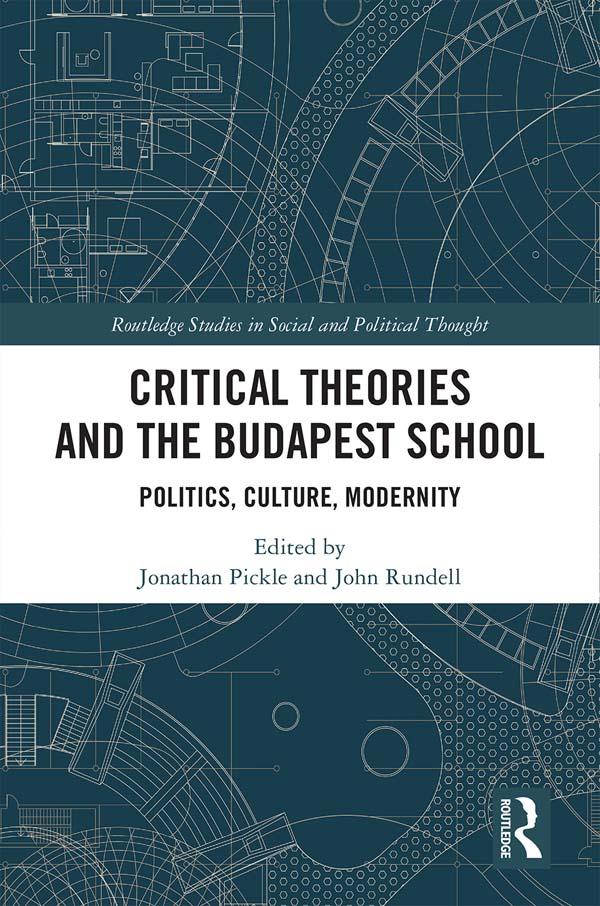
Critical Theories and the Budapest School brings together new perspectives on the Budapest School in the context of contemporary developments in critical theory. Engaging with the work of the prominent group of figures associated with Georg Lukács, this book sheds new light on the unique and nuanced critiques of modernity offered by this school, informed as its members’ insights have been by first-hand experiences of Nazism, Soviet-type societies, and the liberal-democratic West.
With studies of topics central to contemporary critical theory, such as the political and historical consciousness of modernity, the importance of bio-politics, the complexity of the human condition, and the relevance of comedy and friendship to developing critical perspectives, the authors draw on the works of Ágnes Heller, Maria Márkus, György Márkus, and Ferenc Fehér, demonstrating their enduring relevance to critical theory today and the ways in which these philosophers can inform new perspectives on culture and politics.
An innovative reassessment of the Budapest School and the importance of its legacy, this book opens a much-needed and neglected dialogue with other schools and traditions of critical theorizing that will be of interest to scholars of sociology, philosophy, and social theory.
Pay easily by card, Klarna, Apple Pay or Google Pay. Not happy? You always have a 14-day money-back guarantee. Read more in our terms. If you have any questions, email us at hello@memmo.org.
Memmo makes studying easier – wherever you are in the world. We bring your course books and smart study tools together in one place: summaries, quizzes, podcasts and flashcards. Plus Ted, your study buddy who answers anything you wonder. Over 50,000 students already study here – built to help you learn faster and stress less.