
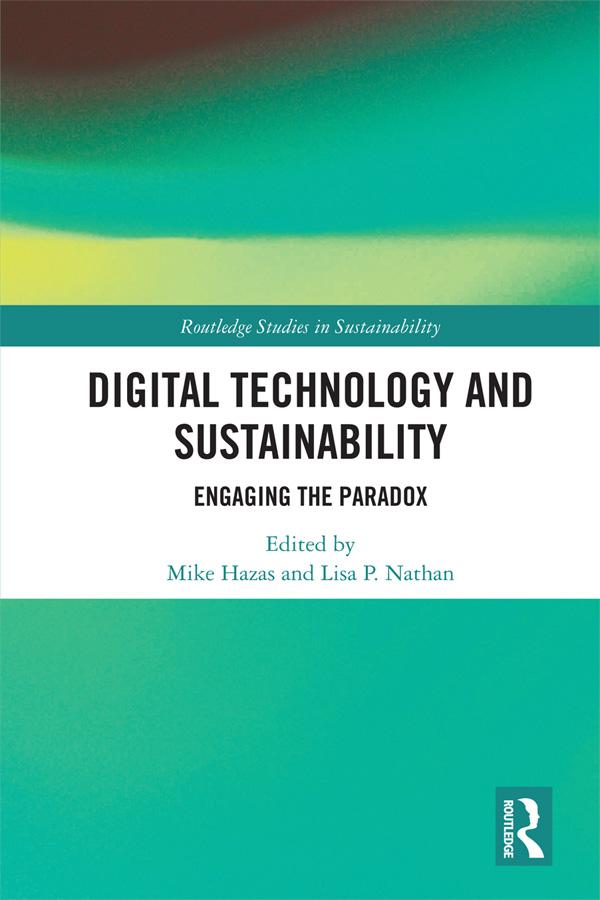
This book brings together diverse voices from across the field of sustainable human computer interaction (SHCI) to discuss what it means for digital technology to support sustainability and how humans and technology can work together optimally for a more sustainable future.
Contemporary digital technologies are hailed by tech companies, governments and academics as leading-edge solutions to the challenges of environmental sustainability; smarter homes, more persuasive technologies, and a robust Internet of Things hold the promise for creating a greener world. Yet, deployments of interactive technologies for such purposes often lead to a paradox: they algorithmically "optimize" heating and lighting of houses without regard to the dynamics of daily life in the home; they can collect and display data that allow us to reflect on energy and emissions, yet the same information can cause us to raise our expectations for comfort and convenience; they might allow us to share best practice for sustainable living through social networking and online communities, yet these same systems further our participation in consumerism and contribute to an ever-greater volume of electronic waste.By acknowledging these paradoxes, this book represents a significant critical inquiry into digital technology’s longer-term impact on ideals of sustainability.
Written by an interdisciplinary team of contributors this book will be of great interest to students and scholars of human computer interaction and environmental studies.
Pay easily by card, Klarna, Apple Pay or Google Pay. Not happy? You always have a 14-day money-back guarantee. Read more in our terms. If you have any questions, email us at hello@memmo.org.
Memmo makes studying easier – wherever you are in the world. We bring your course books and smart study tools together in one place: summaries, quizzes, podcasts and flashcards. Plus Ted, your study buddy who answers anything you wonder. Over 50,000 students already study here – built to help you learn faster and stress less.