
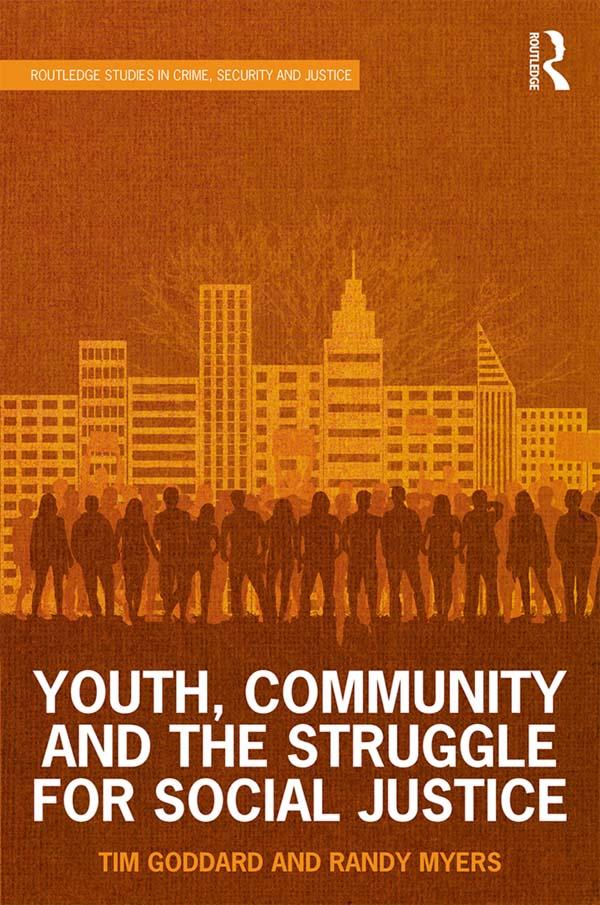
Activists, policymakers, and scholars in the US have called for policy reform and evidence-based efforts to decrease the number of people in jail and prison, improve hostile police–community relations, and rollback the "tough on crime" movement. Given that poor people, particularly poor people of color, make up the majority of those under carceral control in Western, industrial countries, can technical solutions, gradual reforms, and individual-level programming genuinely change the deeply entrenched carceral state that has been expanding in the US for over 40 years?
In this book, the authors offer an examination of the creative ideas that twelve US-based social justice organizations put forward for how participation in social change might spur not only individual-level change in young people, but community-wide mobilization against the harms resulting from the "tough on crime" movement and neoliberal policy. Using alternative programs grounded in political and social consciousness-raising, these organizations provide important and novel methods for how we might roll back carceral expansion. Their approaches resonate with scholarship in criminology and related fields; however, they sharply contrast with popular notions of "what works". The authors detail how community-based organizations must navigate not only these scientific forces, but the bureaucratic and financial ones consistent with neoliberal governance as well as the more formidable, less navigable political barriers that activate when organizations mobilize young people of color for social and carceral reform.
While aware of the formidable barriers they face, the authors highlight the emancipatory potential of community-based social justice organizations working with the most marginalized young people across several major US cities. Written in an accessible way, this book will be of interest to scholars, students, progressive policymakers, practitioners, and activists and their allies who are deeply troubled by the class and racial disparities that pervade the carceral state.
Pay easily by card, Klarna, Apple Pay or Google Pay. Not happy? You always have a 14-day money-back guarantee. Read more in our terms. If you have any questions, email us at hello@memmo.org.
Memmo makes studying easier – wherever you are in the world. We bring your course books and smart study tools together in one place: summaries, quizzes, podcasts and flashcards. Plus Ted, your study buddy who answers anything you wonder. Over 50,000 students already study here – built to help you learn faster and stress less.