
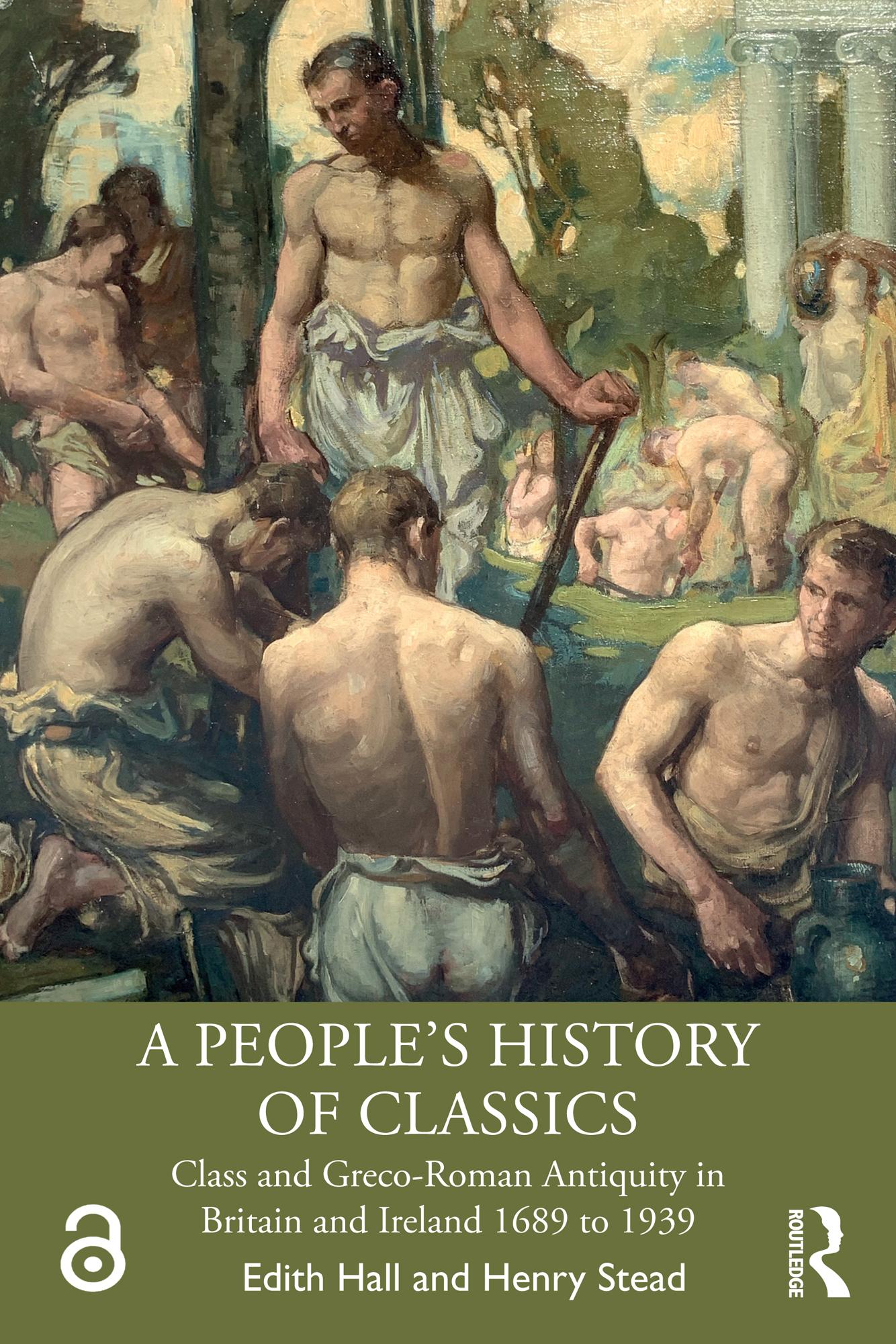
A People’s History of Classics explores the influence of the classical past on the lives of working-class people, whose voices have been almost completely excluded from previous histories of classical scholarship and pedagogy, in Britain and Ireland from the late 17th to the early 20th century.
This volume challenges the prevailing scholarly and public assumption that the intimate link between the exclusive intellectual culture of British elites and the study of the ancient Greeks and Romans and their languages meant that working-class culture was a ‘Classics-Free Zone’. Making use of diverse sources of information, both published and unpublished, in archives, museums and libraries across the United Kingdom and Ireland, Hall and Stead examine the working-class experience of classical culture from the Bill of Rights in 1689 to the outbreak of World War II. They analyse a huge volume of data, from individuals, groups, regions and activities, in a huge range of sources including memoirs, autobiographies, Trade Union collections, poetry, factory archives, artefacts and documents in regional museums. This allows a deeper understanding not only of the many examples of interaction with the Classics, but also what these cultural interactions signified to the working poor: from the promise of social advancement, to propaganda exploited by the elites, to covert and overt class war.
A People’s History of Classics offers a fascinating and insightful exploration of the many and varied engagements with Greece and Rome among the working classes in Britain and Ireland, and is a must-read not only for classicists, but also for students of British and Irish social, intellectual and political history in this period. Further, it brings new historical depth and perspectives to public debates around the future of classical education, and should be read by anyone with an interest in educational policy in Britain today.
Pay easily by card, Klarna, Apple Pay or Google Pay. Not happy? You always have a 14-day money-back guarantee. Read more in our terms. If you have any questions, email us at hello@memmo.org.
Memmo makes studying easier – wherever you are in the world. We bring your course books and smart study tools together in one place: summaries, quizzes, podcasts and flashcards. Plus Ted, your study buddy who answers anything you wonder. Over 75,000 students already study here – built to help you learn faster and stress less.