
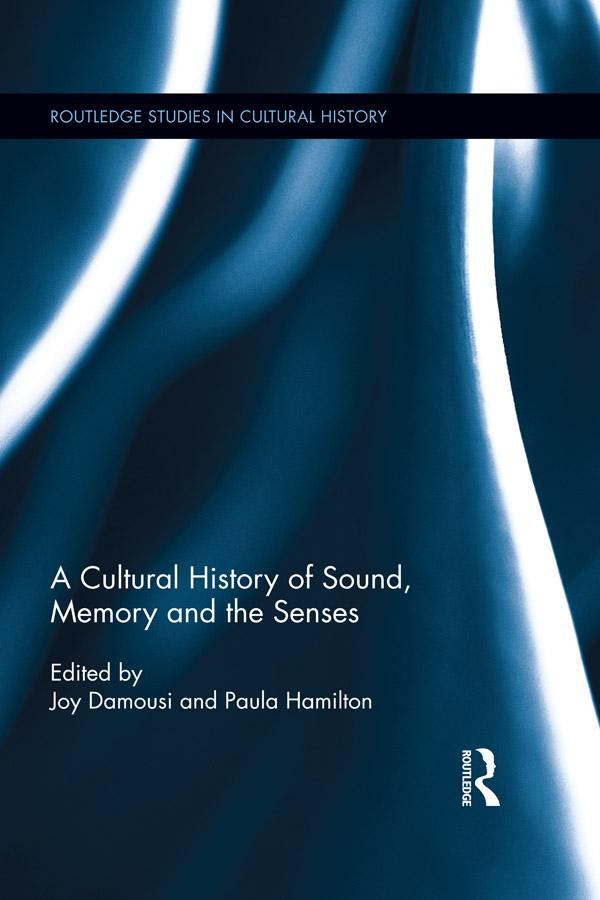
The past 20 years have witnessed a turn towards the sensuous, particularly the aural, as a viable space for critical exploration in History and other Humanities disciplines. This has been informed by a heightened awareness of the role that the senses play in shaping modern identity and understanding of place; and increasingly, how the senses are central to the memory of past experiences and their representation. The result has been a broadening of our historical imagination, which has previously taken the visual for granted and ignored the other senses. Considering how crucial the auditory aspect of life has been, a shift from seeing to hearing past societies offers a further perspective for examining the complexity of historical events and experiences. Historians in many fields have begun to listen to the past, developing new arguments about the history and the memory of sensory experience. This volume builds on scholarship produced over the last twenty years and explores these dimensions by coupling the history of sound and the senses in distinctive ways: through a study of the sound of violence; the sound of voice mediated by technologies and the expression of memory through the senses. Though sound is the most developed field in the study of the sensorium, many argue that each of the senses should not be studied in isolation from each other, and for this reason, the final section incorporates material which emphasizes the sense as relational.
Pay easily by card, Klarna, Apple Pay or Google Pay. Not happy? You always have a 14-day money-back guarantee. Read more in our terms. If you have any questions, email us at hello@memmo.org.
Memmo makes studying easier – wherever you are in the world. We bring your course books and smart study tools together in one place: summaries, quizzes, podcasts and flashcards. Plus Ted, your study buddy who answers anything you wonder. Over 50,000 students already study here – built to help you learn faster and stress less.