
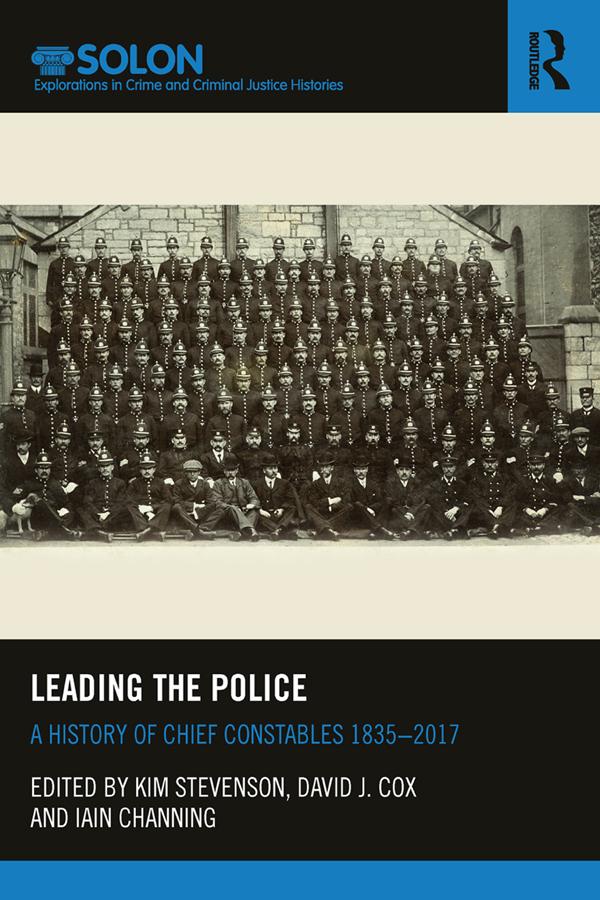
In 2015 the College of Policing published its Leadership Review with specific reference to the type of leadership required to ensure that the next generation of Chief Constables and their management approach will be fit for purpose. Three key issues were highlighted as underpinning the effective leadership and management of contemporary policing: hierarchy, culture and consistency. Yet these are not just relevant to modern policing, having appeared as constant features, implicitly and explicitly, since the creation of the first provincial constabularies in 1835.
This collection reviews the history of the UK Chief Constable, reflecting on the shifts and continuities in police leadership style, practice and performance over the past 180 years, critiquing the factors affecting their operational management and how these impacted upon the organization and service delivery of their forces. The individuality of Chief Constables significantly impacts on how national and local strategies are implemented, shaping relationships with their respective communities and local authorities. Importantly, the book addresses not just the English experience but considers the role of Chief Constables in the whole of the United Kingdom, highlighting the extent to which they could exercise autonomous authority over their force and populace.
The historical perspective adopted contextualises existing considerations of leadership in modern policing, and the extensive timeframe and geographical reach beyond the experience of the Metropolitan force enables a direct engagement with contemporary debates. It also offers a valuable addition to the existing literature contributing to the institutional memory of UK policing. The contributors represent a range of disciplines including history, law, criminology and leadership studies, and some also have practical policing experience.
Pay easily by card, Klarna, Apple Pay or Google Pay. Not happy? You always have a 14-day money-back guarantee. Read more in our terms. If you have any questions, email us at hello@memmo.org.
Memmo makes studying easier – wherever you are in the world. We bring your course books and smart study tools together in one place: summaries, quizzes, podcasts and flashcards. Plus Ted, your study buddy who answers anything you wonder. Over 50,000 students already study here – built to help you learn faster and stress less.