
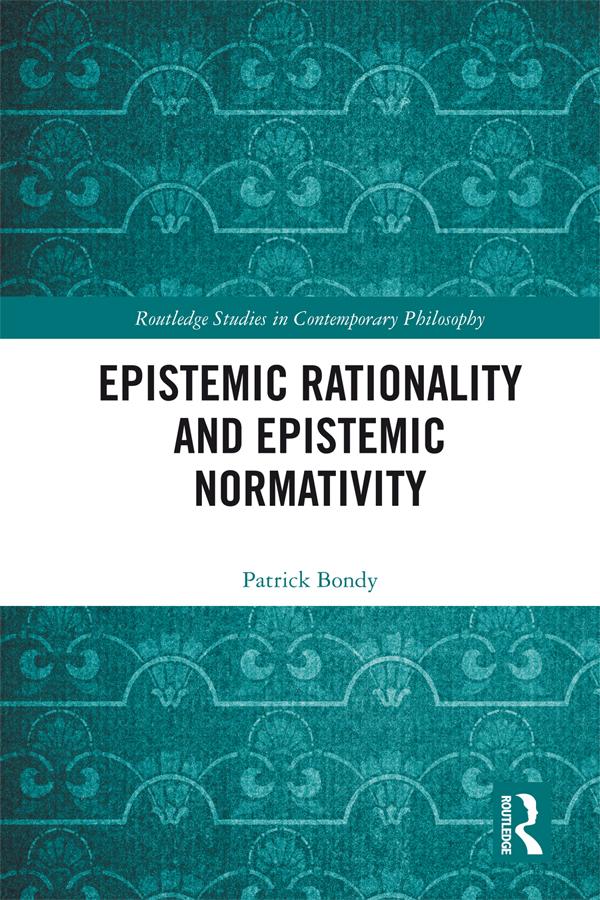
The aim of this book is to answer two important questions about the issue of normativity in epistemology: Why are epistemic reasons evidential and what makes epistemic reasons and rationality normative? Bondy's argument proceeds on the assumption that epistemic rationality goes hand in hand with basing beliefs on good evidence. The opening chapters defend a mental-state ontology of reasons, a deflationary account of how kinds of reasons are distinguished, and a deliberative guidance constraint on normative reasons. They also argue in favor of doxastic voluntarism—the view that beliefs are subject to our direct voluntary control—and embrace the controversial view that voluntarism bears directly on the question of what kinds of things count as reasons for believing. The final three chapters of the book feature a noteworthy critique of the instrumental conception of the nature of epistemic rationality, as well as a defense of the instrumental normativity of epistemic rationality. The final chapter defends the view that epistemic reasons and rationality are normative for us when we have normative reason to get to the truth with respect to some proposition, and it provides a response to the swamping problem for monistic accounts of value.
Pay easily by card, Klarna, Apple Pay or Google Pay. Not happy? You always have a 14-day money-back guarantee. Read more in our terms. If you have any questions, email us at hello@memmo.org.
Memmo makes studying easier – wherever you are in the world. We bring your course books and smart study tools together in one place: summaries, quizzes, podcasts and flashcards. Plus Ted, your study buddy who answers anything you wonder. Over 50,000 students already study here – built to help you learn faster and stress less.