
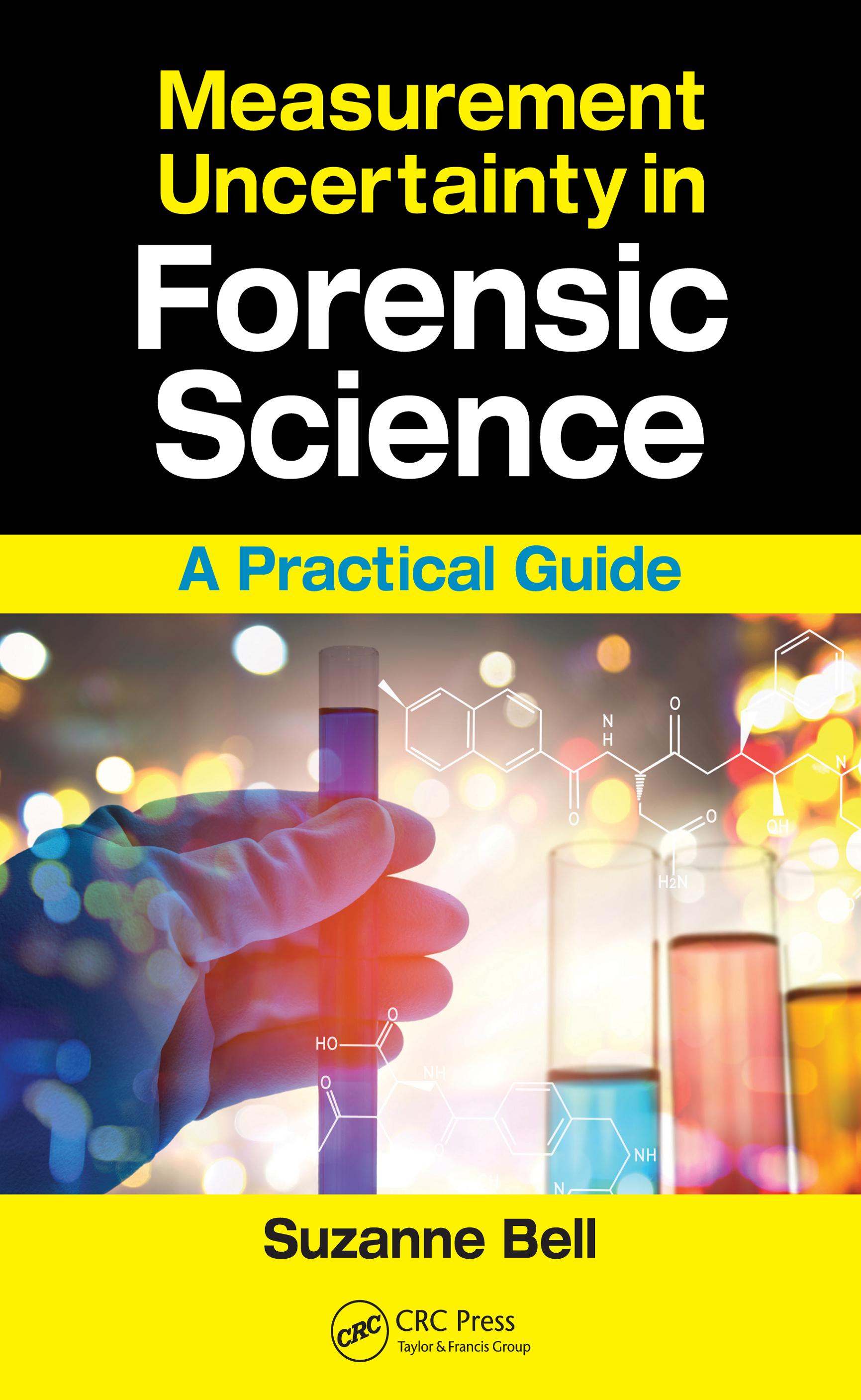
In the courtroom, critical and life-changing decisions are made based on quantitative forensic science data. There is often a range in which a measured value is expected to fall and, in this, an inherent uncertainty associated with such measurement. Uncertainty in this context is not error. In fact, estimations of uncertainty can add to the utility and reliability of quantitative results, be it the length of a firearm barrel, the weight of a drug sample, or the concentration of ethanol in blood.
Measurement Uncertainty in Forensic Science: A Practical Guide describes and defines the concepts related to such uncertainty in the forensic context. The book provides the necessary conceptual background and framework—a baseline—for developing and deploying reasonable and defensible uncertainty estimations across forensic disciplines. Information is presented conceptually, using easily understood examples, to provide a readable, handy reference for scientists in the laboratory, as well as investigators and legal professionals who require a basic understanding of the science underpinning measurement results.
Pay easily by card, Klarna, Apple Pay or Google Pay. Not happy? You always have a 14-day money-back guarantee. Read more in our terms. If you have any questions, email us at hello@memmo.org.
Memmo makes studying easier – wherever you are in the world. We bring your course books and smart study tools together in one place: summaries, quizzes, podcasts and flashcards. Plus Ted, your study buddy who answers anything you wonder. Over 50,000 students already study here – built to help you learn faster and stress less.