
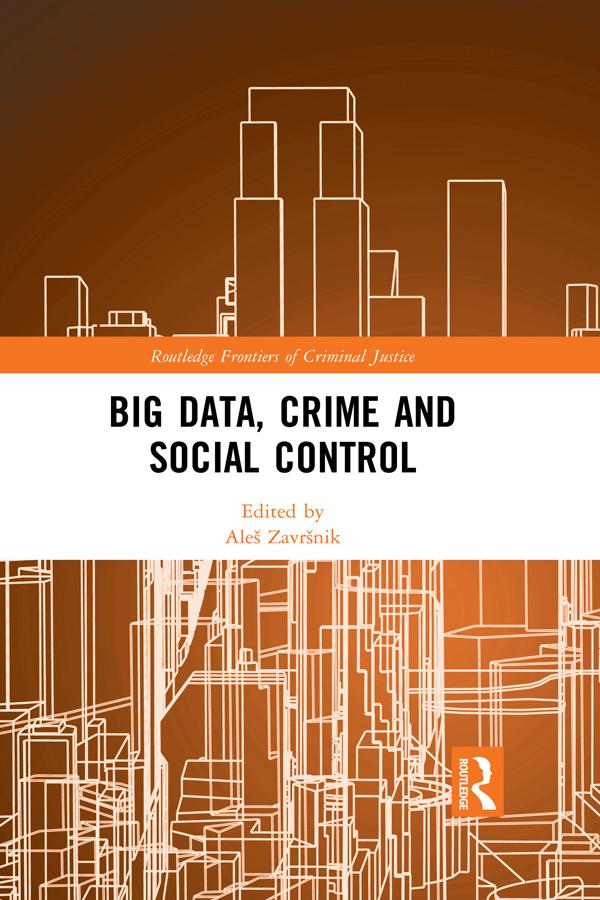
From predictive policing to self-surveillance to private security, the potential uses to of big data in crime control pose serious legal and ethical challenges relating to privacy, discrimination, and the presumption of innocence. The book is about the impacts of the use of big data analytics on social and crime control and on fundamental liberties.
Drawing on research from Europe and the US, this book identifies the various ways in which law and ethics intersect with the application of big data in social and crime control, considers potential challenges to human rights and democracy and recommends regulatory solutions and best practice. This book focuses on changes in knowledge production and the manifold sites of contemporary surveillance, ranging from self-surveillance to corporate and state surveillance. It tackles the implications of big data and predictive algorithmic analytics for social justice, social equality, and social power: concepts at the very core of crime and social control.
This book will be of interest to scholars and students of criminology, sociology, politics and socio-legal studies.
Pay easily by card, Klarna, Apple Pay or Google Pay. Not happy? You always have a 14-day money-back guarantee. Read more in our terms. If you have any questions, email us at hello@memmo.org.
Memmo makes studying easier – wherever you are in the world. We bring your course books and smart study tools together in one place: summaries, quizzes, podcasts and flashcards. Plus Ted, your study buddy who answers anything you wonder. Over 50,000 students already study here – built to help you learn faster and stress less.