
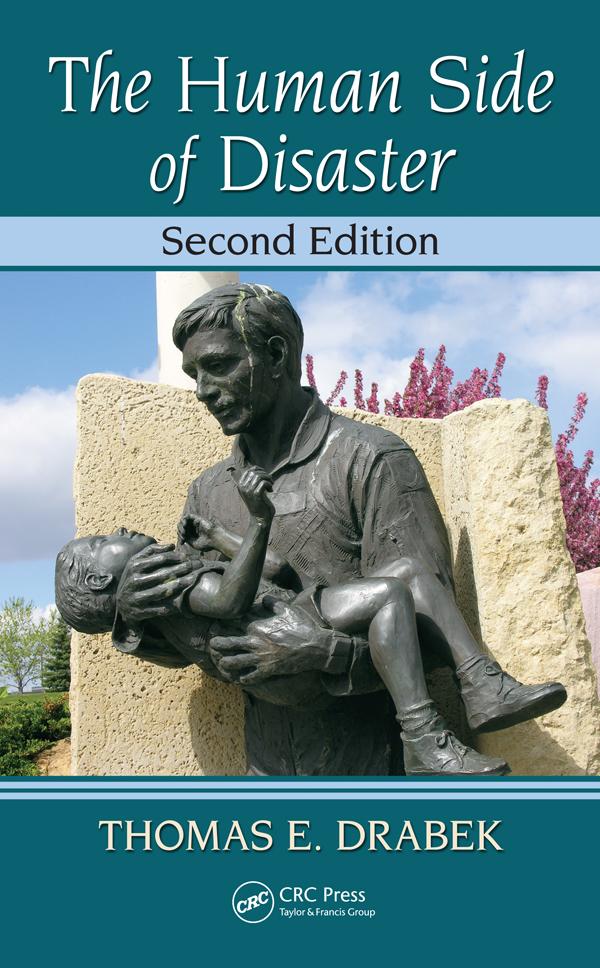
Since the first edition of The Human Side of Disaster was published in 2009, new catastrophes have plagued the globe, including earthquakes in Haiti and New Zealand, tornadoes in Alabama and Missouri, floods in numerous locations, Hurricane Sandy, and the infamous BP oil spill. Enhanced with new cases and real-world examples, The Human Side of Disaster, Second Edition presents an updated summary of the social science knowledge base of human responses to disaster. Dr. Drabek draws upon his 40-plus years of conducting research on individual, group, and organizational responses to disaster to illustrate and integrate key insights from the social sciences to teach us how to anticipate human behaviors in crisis.
The book begins with a series of original short stories rooted within actual disaster events. These stories are woven into the entire text to demonstrate essential findings from the research literature. Dr. Drabek provides an overview of the range of disasters and hazards confronting the public and an explanation of why these are increasing each year, both in number and scope of impact.
The core of the book is a summary of key findings regarding disaster warning responses, evacuation behavior, initial post-impact survival behavior, traditional and emergent roles of volunteers, and both short-term and longer-term disaster impacts. The theme of "organized-disorganization" is used to illustrate multiorganizational response networks that form the key managerial task for local emergency managers. The final chapter provides a new vision for the emergency management profession—one that reflects a more strategic approach wherein disasters are viewed as non-routine social problems.
This book will continue to be an invaluable reference for professionals and students in emergency management and public policy and aid organizations who need to understand human behavior and how best to communicate and work with the public in disaster situations.
Pay easily by card, Klarna, Apple Pay or Google Pay. Not happy? You always have a 14-day money-back guarantee. Read more in our terms. If you have any questions, email us at hello@memmo.org.
Memmo makes studying easier – wherever you are in the world. We bring your course books and smart study tools together in one place: summaries, quizzes, podcasts and flashcards. Plus Ted, your study buddy who answers anything you wonder. Over 50,000 students already study here – built to help you learn faster and stress less.