
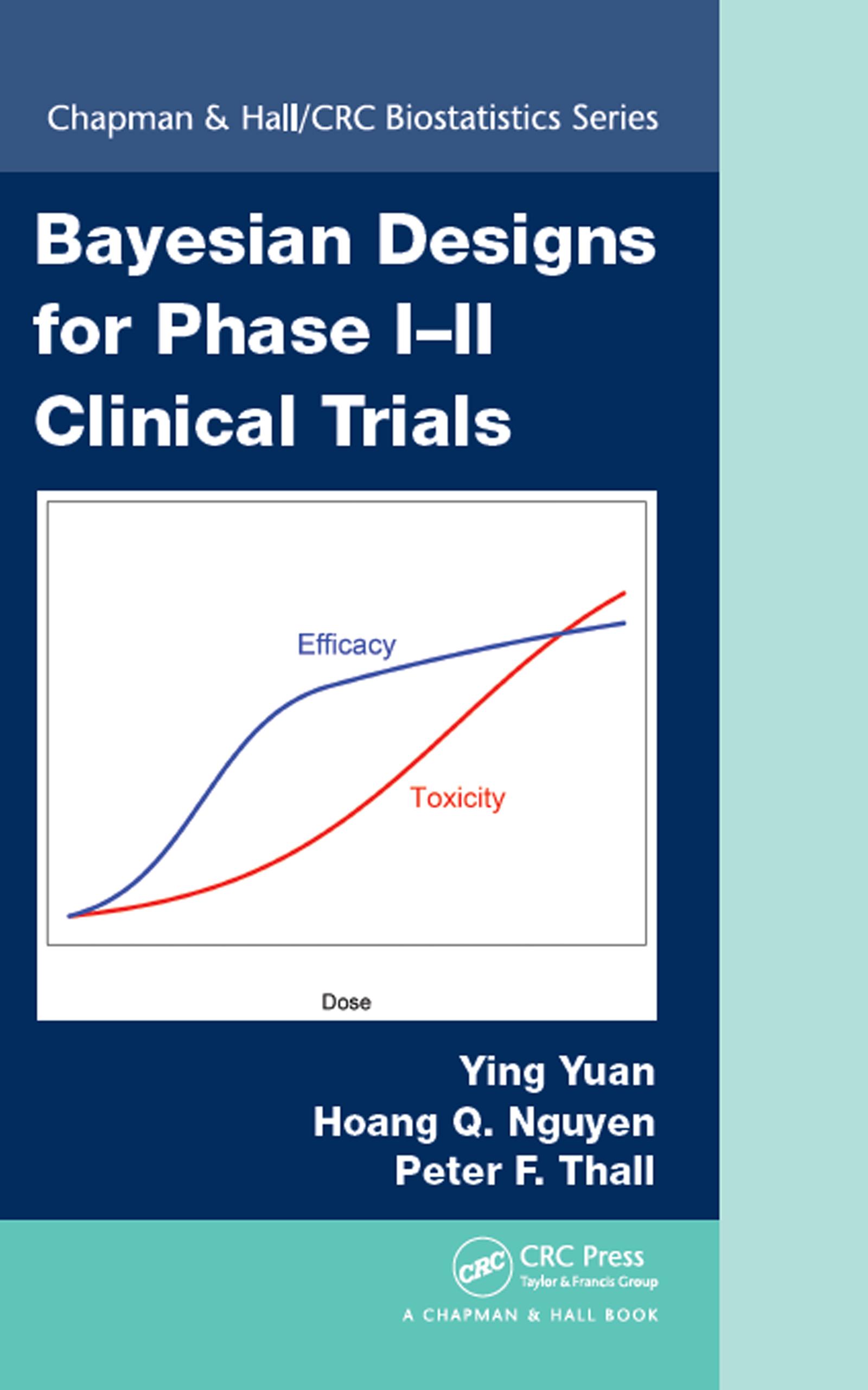
Reliably optimizing a new treatment in humans is a critical first step in clinical evaluation since choosing a suboptimal dose or schedule may lead to failure in later trials. At the same time, if promising preclinical results do not translate into a real treatment advance, it is important to determine this quickly and terminate the clinical evaluation process to avoid wasting resources.
Bayesian Designs for Phase I–II Clinical Trials describes how phase I–II designs can serve as a bridge or protective barrier between preclinical studies and large confirmatory clinical trials. It illustrates many of the severe drawbacks with conventional methods used for early-phase clinical trials and presents numerous Bayesian designs for human clinical trials of new experimental treatment regimes.
Written by research leaders from the University of Texas MD Anderson Cancer Center, this book shows how Bayesian designs for early-phase clinical trials can explore, refine, and optimize new experimental treatments. It emphasizes the importance of basing decisions on both efficacy and toxicity.
Pay easily by card, Klarna, Apple Pay or Google Pay. Not happy? You always have a 14-day money-back guarantee. Read more in our terms. If you have any questions, email us at hello@memmo.org.
Memmo makes studying easier – wherever you are in the world. We bring your course books and smart study tools together in one place: summaries, quizzes, podcasts and flashcards. Plus Ted, your study buddy who answers anything you wonder. Over 75,000 students already study here – built to help you learn faster and stress less.