
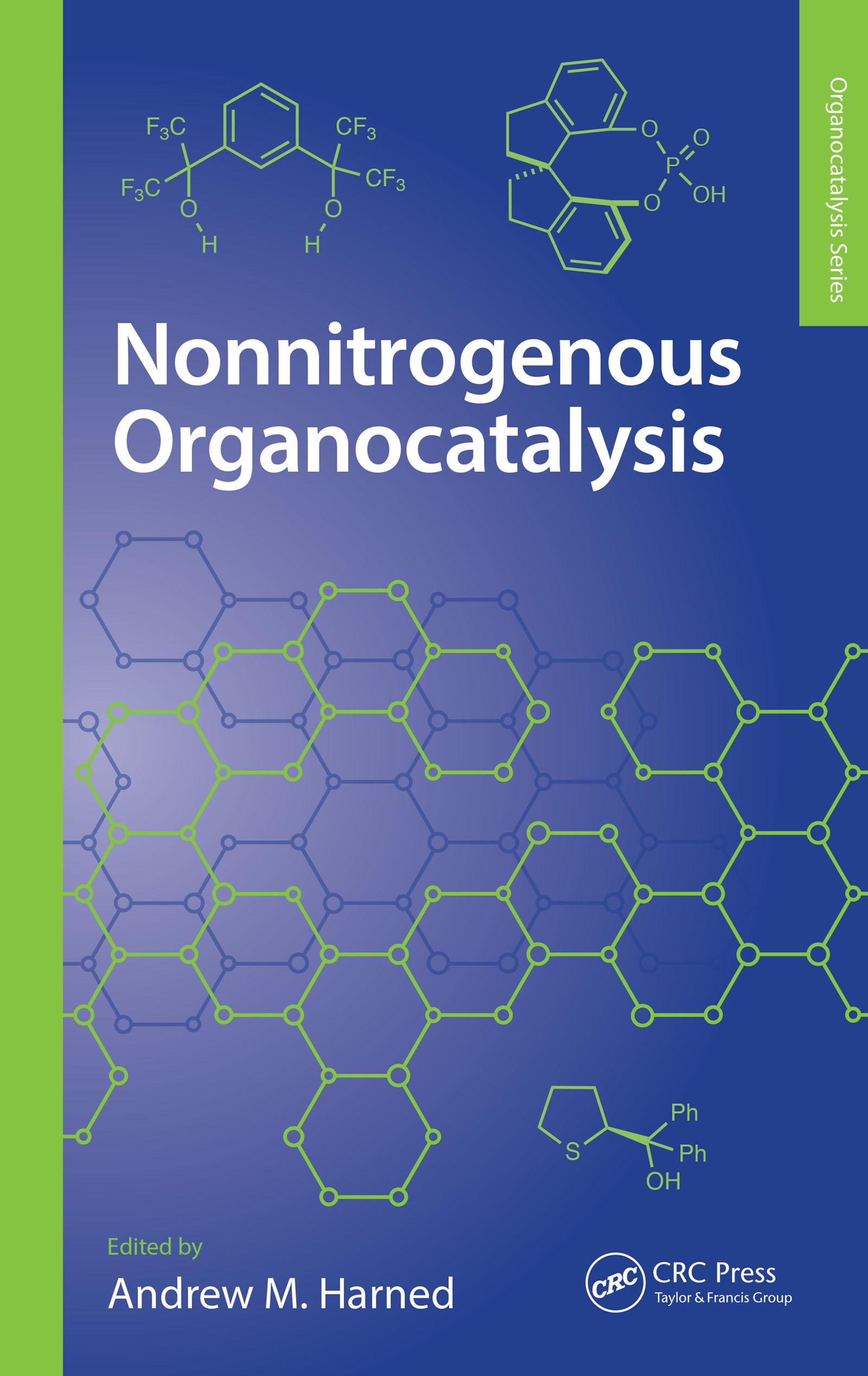
Since the 1990s the synthetic community has shown a growing interest in the development of catalytic reactions that employ entirely organic catalysts – so-called ‘organocatalysts’. With the current emphasis on green chemistry throughout the chemical industry, organocatalysis has become indispensible. In spite of this growth and recognition, there can be a misconception that organocatalysts are only based on nitrogen-containing functional groups (amines, ureas, and quaternary ammonium salts, for example), and are only useful for asymmetric reactions.
Nonnitrogenous Organocatalysis shows that the umbrella of organocatalysis covers other main group elements besides nitrogen, and the coverage is not just limited to asymmetric methods. Many of the catalysts and mechanisms discussed may not have a viable asymmetric variant or cannot be rendered asymmetric at all. This does not make them any less useful, as illustrated in this book.
Pay easily by card, Klarna, Apple Pay or Google Pay. Not happy? You always have a 14-day money-back guarantee. Read more in our terms. If you have any questions, email us at hello@memmo.org.
Memmo makes studying easier – wherever you are in the world. We bring your course books and smart study tools together in one place: summaries, quizzes, podcasts and flashcards. Plus Ted, your study buddy who answers anything you wonder. Over 75,000 students already study here – built to help you learn faster and stress less.