
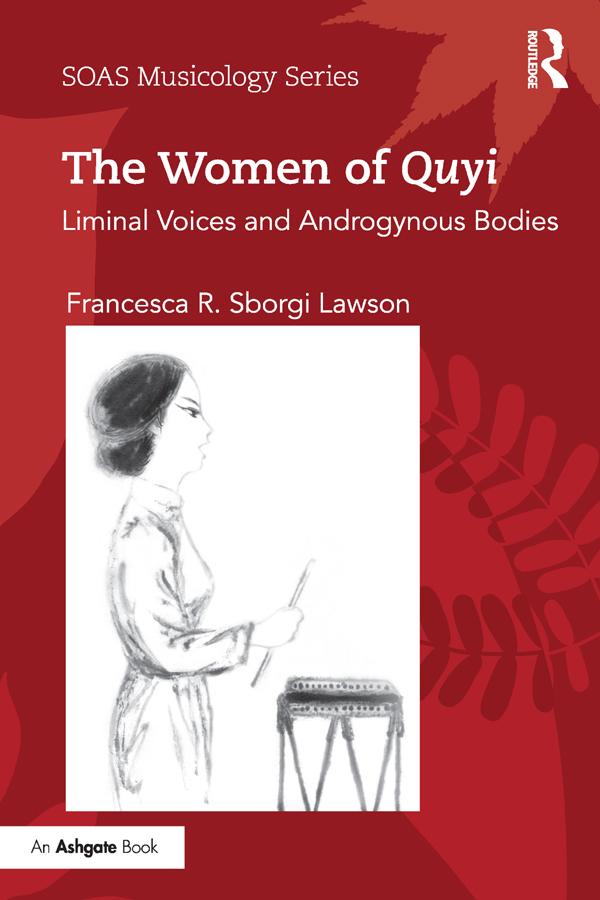
Why has the female voice—as the resonant incarnation of the female body—inspired both fascination and ambivalence? Why were women restricted from performing on the Chinese public stage? How have female roles and voices been appropriated by men throughout much of the history of Chinese theatre? Why were the women of quyi—a community of Chinese female singers in Republican Tianjin—able to become successful, respected artists when other female singers and actors in competing performance traditions struggled for acceptance? Drawing substantially on original ethnographic fieldwork conducted in the 1980s and 1990s, Francesca R. Sborgi Lawson offers answers to these questions and demonstrates how the women of quyi successfully negotiated their sexuality and vocality in performance. Owing to their role as third-person narrators, the women of quyi bridged the gender gap, creating an androgynous persona that de-emphasized their feminine appearance and, at the same time, allowed them to showcase their female voices on public stages—places that had been previously unwelcoming to female artists. This is a story about female storytellers who sang their way to respectability and social change in the early decades of the twentieth century by minimizing their bodies in order to allow their voices to be heard.
Pay easily by card, Klarna, Apple Pay or Google Pay. Not happy? You always have a 14-day money-back guarantee. Read more in our terms. If you have any questions, email us at hello@memmo.org.
Memmo makes studying easier – wherever you are in the world. We bring your course books and smart study tools together in one place: summaries, quizzes, podcasts and flashcards. Plus Ted, your study buddy who answers anything you wonder. Over 75,000 students already study here – built to help you learn faster and stress less.