
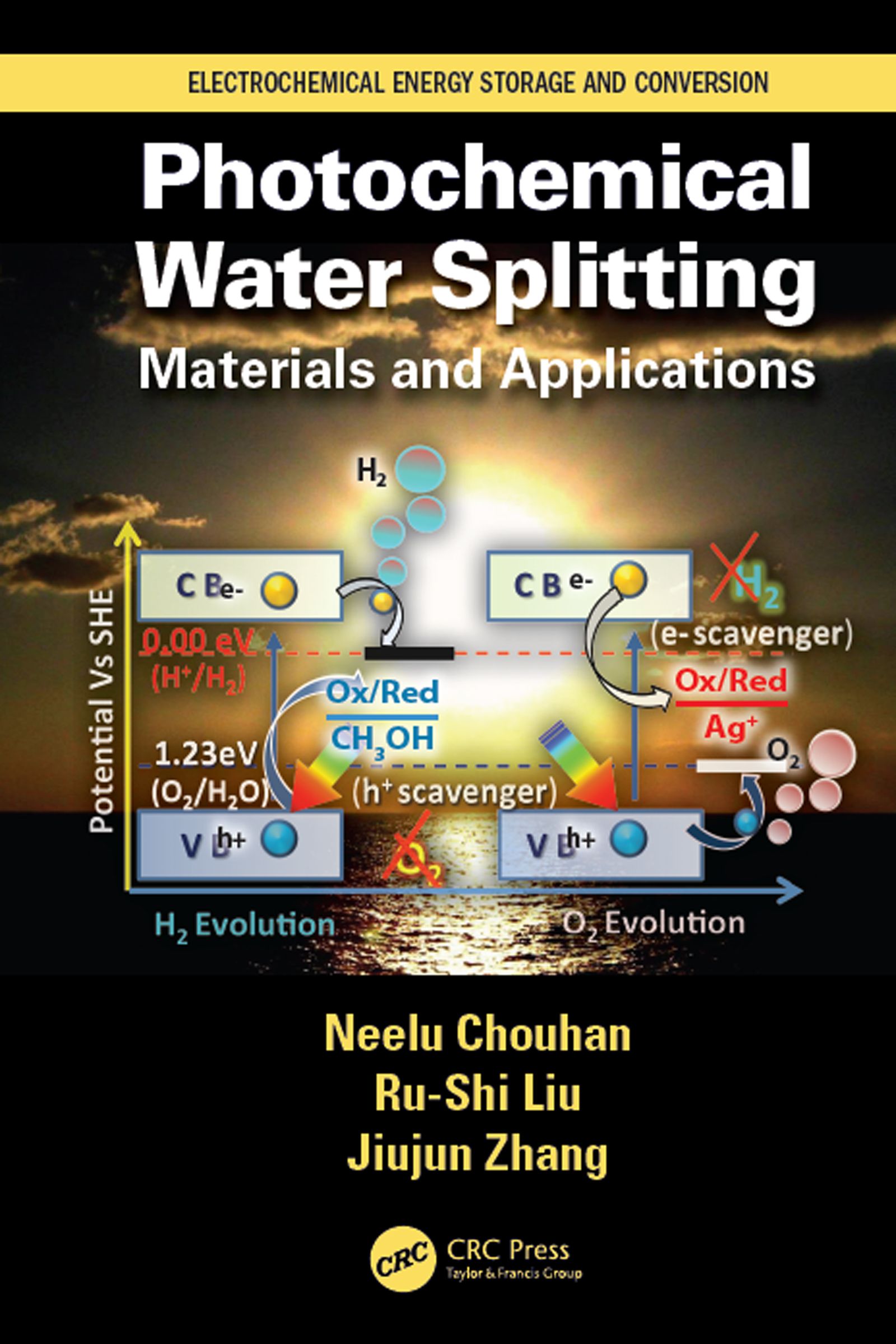
Cleavage of water to its constituents (i.e., hydrogen and oxygen) for production of hydrogen energy at an industrial scale is one of the "holy grails" of materials science. That can be done by utilizing the renewable energy resource i.e. sunlight and photocatalytic material. The sunlight and water are abundant and free of cost available at this planet. But the development of a stable, efficient and cost-effective photocatalytic material to split water is still a great challenge. To develop the effective materials for photocatalytic water splitting, various type of materials with different sizes and structures from nano to giant have been explored that includes metal oxides, metal chalcogenides, carbides, nitrides, phosphides, and so on. Fundamental concepts and state of art materials for the water splitting are also discussed to understand the phenomenon/mechanism behind the photoelectrochemical water splitting. This book gives a comprehensive overview and description of the manufacturing of photocatalytic materials and devices for water splitting by controlling the chemical composition, particle size, morphology, orientation and aspect ratios of the materials. The real technological breakthroughs in the development of the photoactive materials with considerable efficiency, are well conversed to bring out the practical aspects of the technique and its commercialization.
Pay easily by card, Klarna, Apple Pay or Google Pay. Not happy? You always have a 14-day money-back guarantee. Read more in our terms. If you have any questions, email us at hello@memmo.org.
Memmo makes studying easier – wherever you are in the world. We bring your course books and smart study tools together in one place: summaries, quizzes, podcasts and flashcards. Plus Ted, your study buddy who answers anything you wonder. Over 75,000 students already study here – built to help you learn faster and stress less.