
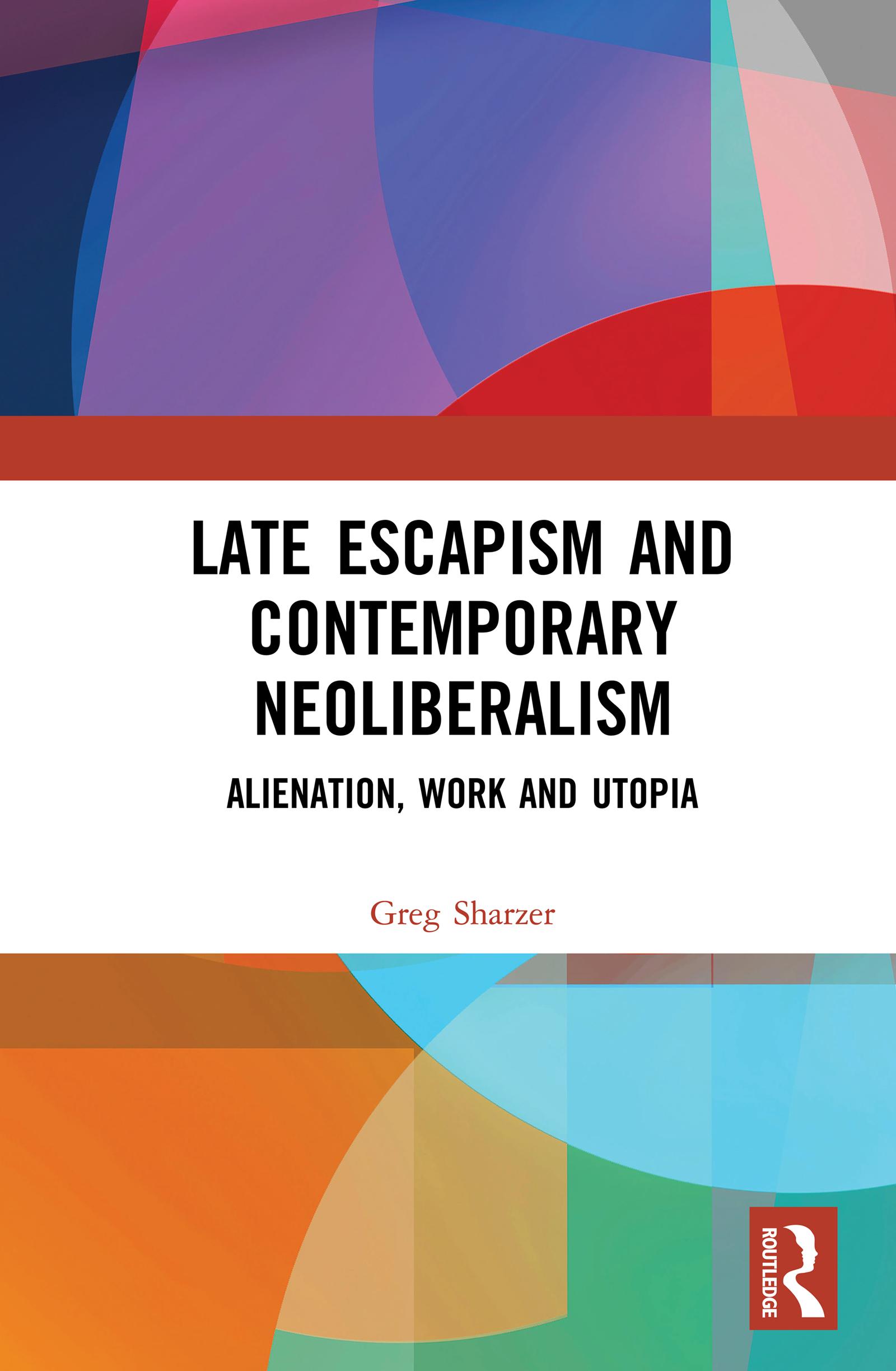
This book suggests that escapism – the desire to leave one’s physical or emotional circumstances for an ideal alternative – is a way to understand the social conflicts that structure our world. Considering this phenomenon across psychology, labour and cultural studies, the author engages with critical theorists such as Lukács, Fromm and Marcuse to examine how escapism appears in our minds, workplaces and utopian imaginaries from fiction to music. In this study, escapism emerges as a constitutive feature of the late capitalist lifeworld – a feature that must be understood in order to create social change.
Defining escapism as a new field of study, Late Escapism and Contemporary Neoliberalism: Alienation, Work and Utopia suggests that the phenomenon has much to teach us about contemporary consciousness and how we resist and reshape the edicts of neoliberalism. As such, this book will appeal to scholars of cultural and critical theory, social movements and political sociology.
Pay easily by card, Klarna, Apple Pay or Google Pay. Not happy? You always have a 14-day money-back guarantee. Read more in our terms. If you have any questions, email us at hello@memmo.org.
Memmo makes studying easier – wherever you are in the world. We bring your course books and smart study tools together in one place: summaries, quizzes, podcasts and flashcards. Plus Ted, your study buddy who answers anything you wonder. Over 50,000 students already study here – built to help you learn faster and stress less.