
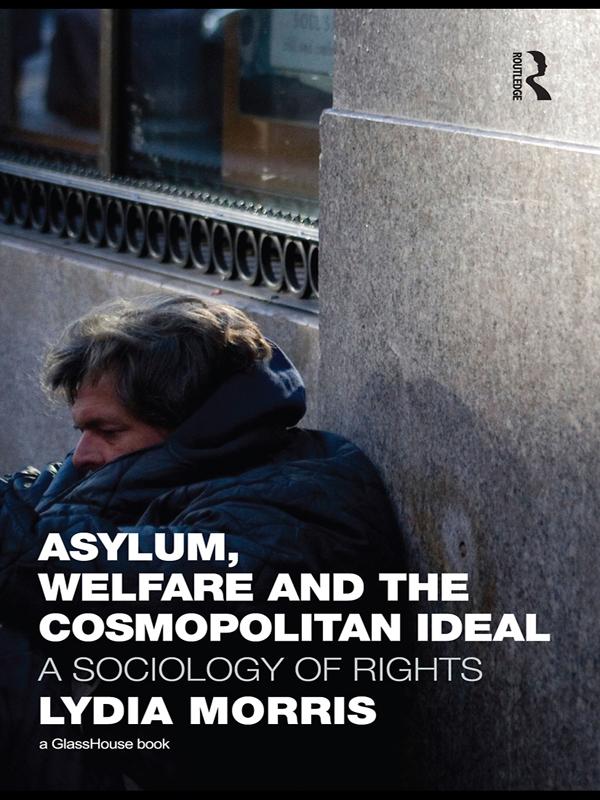
Asylum, Welfare and the Cosmopolitan Ideal: A Sociology of Rights puts forward the argument that rights must be understood as part of a social process: a terrain for strategies of inclusion and exclusion but also of contestation and negotiation. Engaging debate about how ‘cosmopolitan’ principles and practices may be transforming national sovereignty, Lydia Morris explores this premise through a case study of legal activism, civil society mobilisation, and judicial decision-making. The book documents government attempts to use destitution as a deterrent to control asylum numbers, and examines a series of legal challenges to this policy, spanning a period both before and after the Human Rights Act. Lydia Morris shows how human rights can be used as a tool for radical change, and in so doing proposes a multi-layered 'model' for understanding rights. This incorporates political strategy, public policy, civil society mobilisation, judicial decision-making, and their public impact, and advances a dynamic understanding of rights as part of the recurrent encounter between principles and politics. Rights are therefore seen as both a social product and a social force.
Pay easily by card, Klarna, Apple Pay or Google Pay. Not happy? You always have a 14-day money-back guarantee. Read more in our terms. If you have any questions, email us at hello@memmo.org.
Memmo makes studying easier – wherever you are in the world. We bring your course books and smart study tools together in one place: summaries, quizzes, podcasts and flashcards. Plus Ted, your study buddy who answers anything you wonder. Over 50,000 students already study here – built to help you learn faster and stress less.