
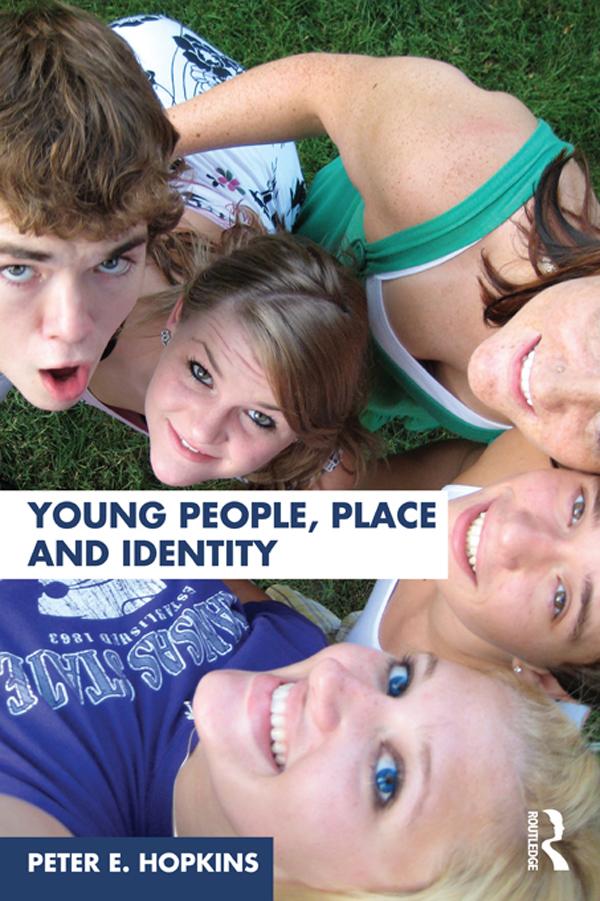
Young People, Place and Identity offers a series of rich insights into young people’s everyday lives. What places do young people engage with on a daily basis? How do they use these places? How do their identities influence these contexts? By working through common-sense understandings of young people’s behaviours and the places they occupy, the author seeks to answer these and other questions. In doing so the book challenges and re-shapes understandings of young people’s relationships with different places and identities.
The textbook is one of the first books to map out the scales, themes and sites engaged with by young people on a daily basis as they construct their multiple identities. The scales explored here include the body, neighbourhood and community, mobilities and transitions and urban-rural settings and how these all shape and are shaped by young people’s identities. Each chapter explores how social identities (such as race, gender, sexuality, class, disability and religion) are constructed within particular contexts and influenced by multiple processes of inclusion and exclusion. These discussions are supported by details of the research methods and ethical issues involved in researching young people’s lives. Drawing upon research from a range of contexts, including Europe, North America and Australasia, this book demonstrates the complex ways in which young people creatively shape, contest and resist their engagements with different places and identities. The range of issues, topics and case studies explored include: ethical and methodological issues in youth research; youth subcultures; experiences of home; territorialism; youth and crime; political engagement and participation; responses to global issues; engagements with different institutional contexts; negotiating public space; the transition to adulthood; drinking cultures. The author explores these issues through blending together original empirical research, theory and policy.
Individual chapters are supported by key themes, project ideas and suggested further reading. Details of key authors, journals and research centres and organisations are also included at the end of the book. This textbook will be pertinent for undergraduate and postgraduate students and academic researchers interested in better understanding the relationships between young people, places and identities.
Pay easily by card, Klarna, Apple Pay or Google Pay. Not happy? You always have a 14-day money-back guarantee. Read more in our terms. If you have any questions, email us at hello@memmo.org.
Memmo makes studying easier – wherever you are in the world. We bring your course books and smart study tools together in one place: summaries, quizzes, podcasts and flashcards. Plus Ted, your study buddy who answers anything you wonder. Over 50,000 students already study here – built to help you learn faster and stress less.