
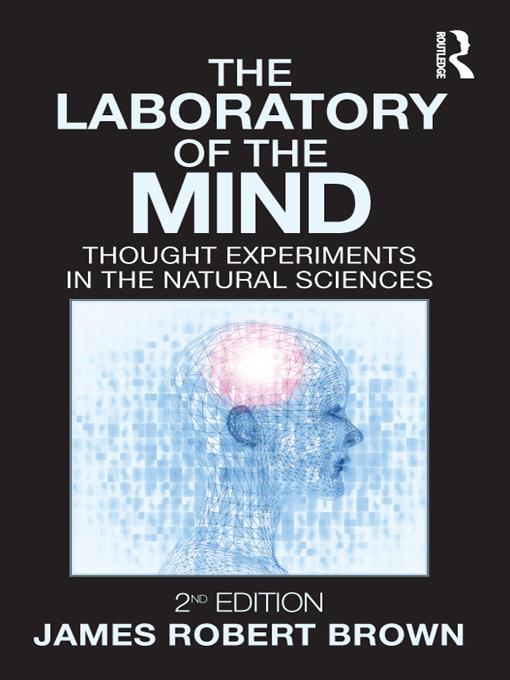
Newton's bucket, Einstein's elevator, Schrödinger's cat – these are some of the best-known examples of thought experiments in the natural sciences. But what function do these experiments perform? Are they really experiments at all? Can they help us gain a greater understanding of the natural world? How is it possible that we can learn new things just by thinking?
In this revised and updated new edition of his classic text The Laboratory of the Mind, James Robert Brown continues to defend apriorism in the physical world. This edition features two new chapters, one on “counter thought experiments” and another on the development of inertial motion. With plenty of illustrations and updated coverage of the debate between Platonic rationalism and classic empiricism, this is a lively and engaging contribution to the field of philosophy of science.
Pay easily by card, Klarna, Apple Pay or Google Pay. Not happy? You always have a 14-day money-back guarantee. Read more in our terms. If you have any questions, email us at hello@memmo.org.
Memmo makes studying easier – wherever you are in the world. We bring your course books and smart study tools together in one place: summaries, quizzes, podcasts and flashcards. Plus Ted, your study buddy who answers anything you wonder. Over 50,000 students already study here – built to help you learn faster and stress less.