
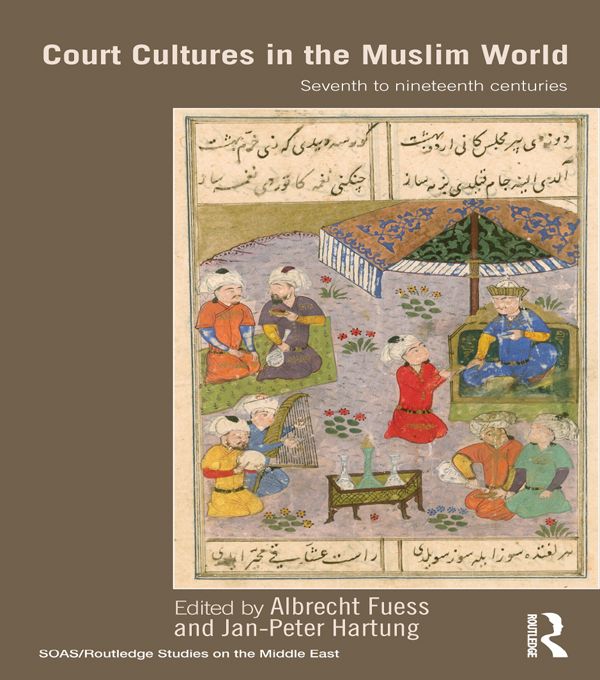
Courts and the complex phenomenon of the courtly society have received intensified interest in academic research over recent decades, however, the field of Islamic court culture has so far been overlooked. This book provides a comparative perspective on the history of courtly culture in Muslim societies from the earliest times to the nineteenth century, and presents an extensive collection of images of courtly life and architecture within the Muslim realm.
The thematic methodology employed by the contributors underlines their interdisciplinary and comprehensive approach to issues of politics and patronage from across the Islamic world stretching from Cordoba to India. Themes range from the religious legitimacy of Muslim rulers, terminologies for court culture in Oriental languages, Muslim concepts of space for royal representation, accessibility of rulers, the role of royal patronage for Muslim scholars and artists to the growing influence of European courts as role models from the eighteenth century onwards. Discussing specific terminologies for courts in Oriental languages and explaining them to the non specialist, chapters describe the specific features of Muslim courts and point towards future research areas. As such, it fills this important gap in the existing literature in the areas of Islamic history, religion, and Islam in particular.
Pay easily by card, Klarna, Apple Pay or Google Pay. Not happy? You always have a 14-day money-back guarantee. Read more in our terms. If you have any questions, email us at hello@memmo.org.
Memmo makes studying easier – wherever you are in the world. We bring your course books and smart study tools together in one place: summaries, quizzes, podcasts and flashcards. Plus Ted, your study buddy who answers anything you wonder. Over 50,000 students already study here – built to help you learn faster and stress less.