
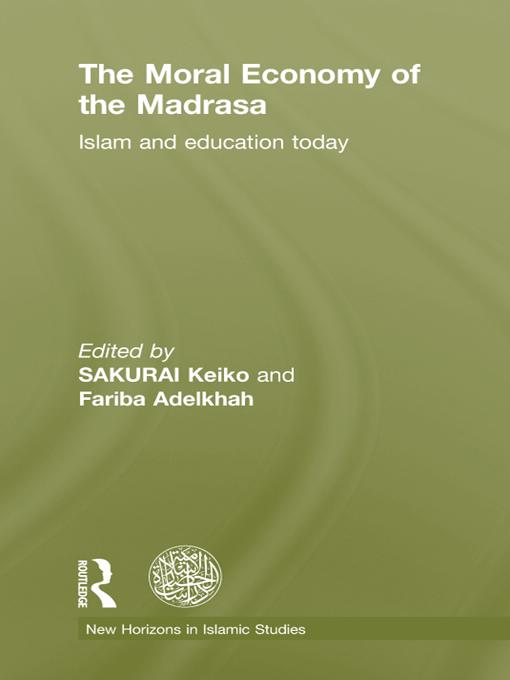
The revival of madrasas in the 1980s coincided with the rise of political Islam and soon became associated with the "clash of civilizations" between Islam and the West. This volume examines the rapid expansion of madrasas across Asia and the Middle East and analyses their role in society within their local, national and global context.
Based on anthropological investigations in Afghanistan, Bangladesh, China, Iran, and Pakistan, the chapters take a new approach to the issue, examining the recent phenomenon of women in madrasas; Hui Muslims in China; relations between the Iran’s Shia seminary after the 1979-Islamic revolution and Shia in Pakistan and Afghanistan; and South Asian madrasas. Emphasis is placed on the increased presence of women in these institutions, and the reciprocal interactions between secular and religious schools in those countries. Taking into account social, political and demographic changes within the region, the authors show how madrasas have been successful in responding to the educational demand of the people and how they have been modernized their style to cope with a changing environment.
A timely contribution to a subject with great international appeal, this book will be of great interest to students and scholars of international politics, political Islam, Middle East and Asian studies and anthropology.
Pay easily by card, Klarna, Apple Pay or Google Pay. Not happy? You always have a 14-day money-back guarantee. Read more in our terms. If you have any questions, email us at hello@memmo.org.
Memmo makes studying easier – wherever you are in the world. We bring your course books and smart study tools together in one place: summaries, quizzes, podcasts and flashcards. Plus Ted, your study buddy who answers anything you wonder. Over 50,000 students already study here – built to help you learn faster and stress less.