
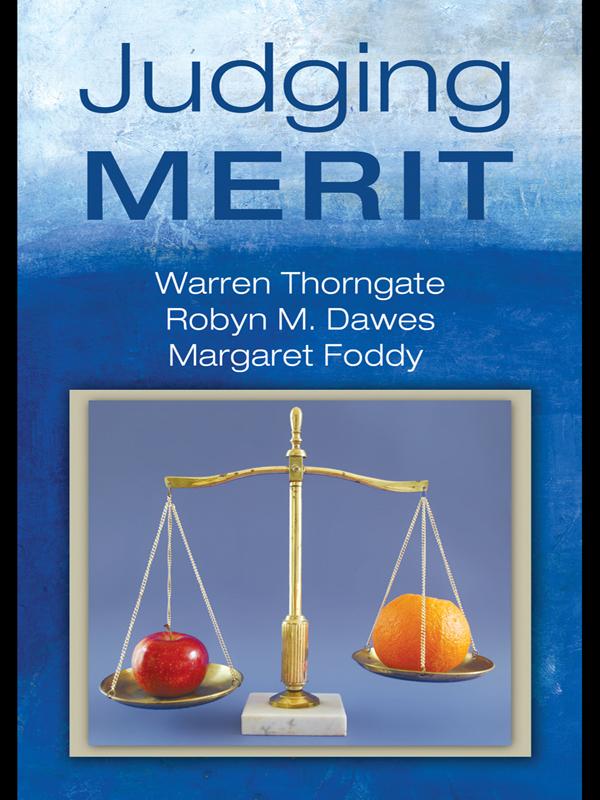
Merit-based tests and contests have become popular methods for allocating rewards – from trophies to contracts, jobs to grants, admissions to licenses. With origins in jurisprudence, methods of rewarding merit seem fairer than those rewarding political or social connections, bribery, aggression, status, or wealth. Because of this, merit-based competitions are well-suited to the societal belief that people should be rewarded for what they know or do, and not for who they know or are; however, judging merit is rarely an easy task – it is prone to a variety of biases and errors. Small biases and errors, especially in large competitions, can make large differences in who or what is rewarded. It is important, then, to learn how to spot flaws in procedures for judging merit and to correct them when possible.
Based on over 20 years of theory and research in human judgment, decision making and social psychology, this unique book brings together for the first time what is known about the processes and problems of judging merit and their consequences. It also provides practical suggestions for increasing the fairness of merit-based competitions, and examines the future and limits of these competitions in society.
Pay easily by card, Klarna, Apple Pay or Google Pay. Not happy? You always have a 14-day money-back guarantee. Read more in our terms. If you have any questions, email us at hello@memmo.org.
Memmo makes studying easier – wherever you are in the world. We bring your course books and smart study tools together in one place: summaries, quizzes, podcasts and flashcards. Plus Ted, your study buddy who answers anything you wonder. Over 50,000 students already study here – built to help you learn faster and stress less.