
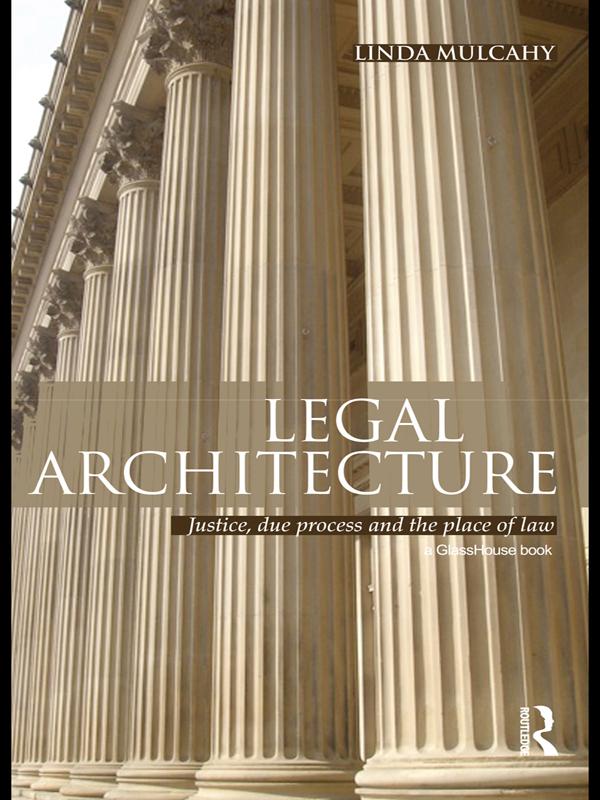
Legal Architecture addresses how the environment of the trial can be seen as a physical expression of our relationship with ideals of justice. It provides an alternative account of the trial, which charts the troubled history of notions of due process and participation. In contrast to visions of judicial space as neutral, Linda Mulcahy argues that understanding the factors that determine the internal design of the courthouse and courtroom are crucial to a broader and more nuanced understanding of the trial. Partitioning of the courtroom into zones and the restriction of movement within it are the result of turf wars about who can legitimately participate in the legal arena and call the judiciary to account. The gradual containment of the public, the increasing amount of space allocated to advocates, and the creation of dedicated space for journalists and the jury, all have complex histories that deserve attention. But these issues are not only of historical significance. Across jurisdictions, questions are now being asked about the internal configurations of the courthouse and courtroom, and whether standard designs meet the needs of modern participatory democracies: including questions about the presence and design of the modern dock; the ways in which new technologies threaten to change the dynamics of the trial and lead to the dematerialization of our primary site of adversarial practice; and the extent to which courthouses are designed in ways which realise their professed status as public spaces. This fascinating and original reflection on legal architecture will be of interest to socio-legal or critical scholars working in the field of legal geography, legal history, criminology, legal systems, legal method, evidence, human rights and architecture.
Pay easily by card, Klarna, Apple Pay or Google Pay. Not happy? You always have a 14-day money-back guarantee. Read more in our terms. If you have any questions, email us at hello@memmo.org.
Memmo makes studying easier – wherever you are in the world. We bring your course books and smart study tools together in one place: summaries, quizzes, podcasts and flashcards. Plus Ted, your study buddy who answers anything you wonder. Over 50,000 students already study here – built to help you learn faster and stress less.