
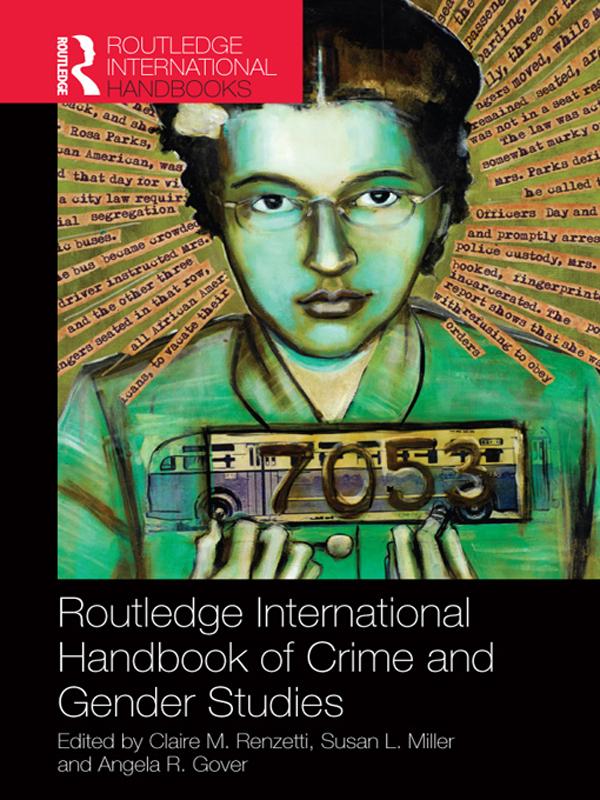
Criminological research has historically been based on the study of men, boys and crime. As a result, the criminal justice system’s development of policies, programs, and treatment regimes was based on the male offender. It was not until the 1970s that some criminologists began to draw attention to the neglect of gender in the study of crime, but today, the study of gender and crime is burgeoning within criminology and includes a vast literature.
The Routledge International Handbook of Crime and Gender Studies is a collection of original, cutting-edge, multidisciplinary essays which provide a thorough overview of the history and development of research on gender and crime, covering topics based around:
- theoretical and methodological approaches
- gender and victimization
- gender and offending
- gendered work in the criminal justice system
- future directions in gender and crime research.
Alongside these essays are boxes which highlight particularly innovative ideas or controversial topics – such as cybercrime, restorative justice, campus crime, and media depictions. A second set of boxes features leading gender and crime researchers who reflect on what sparked their interest in the subject.
This engaging and thoughtful collection will be invaluable for students and scholars of criminology, sociology, psychology, public health, social work, cultural studies, media studies, economics and political science.
Pay easily by card, Klarna, Apple Pay or Google Pay. Not happy? You always have a 14-day money-back guarantee. Read more in our terms. If you have any questions, email us at hello@memmo.org.
Memmo makes studying easier – wherever you are in the world. We bring your course books and smart study tools together in one place: summaries, quizzes, podcasts and flashcards. Plus Ted, your study buddy who answers anything you wonder. Over 50,000 students already study here – built to help you learn faster and stress less.