
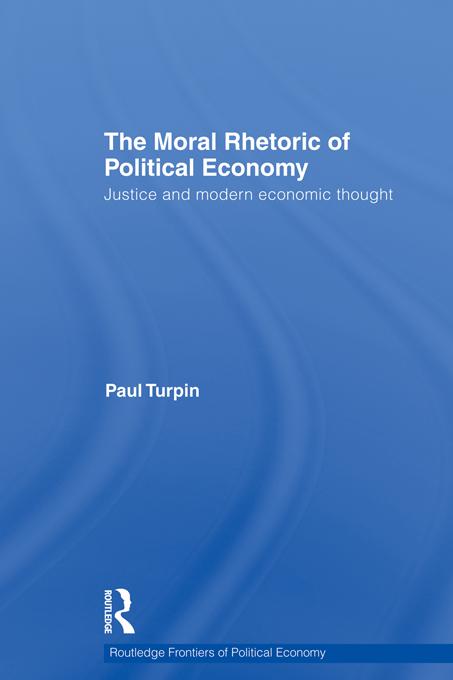
Two of the most important economics treatise are Adam Smith's Theory of Moral Sentiments and Wealth of Nations and Milton Friedman's Capitalism and Freedom. In this book, Paul Turpin provides a rhetorical analysis of these texts arguing that both Smith and Friedman use argumentative and narrative depictions of character to reinforce a sense of societal decorum as a stabilizing foundation for their theories of liberal political economy.
The comparison of Smith and Friedman by itself is a major contribution to the development of the history of economic thought. It adds a new, historical, depth to the heterodox analyses and critiques of twentieth century economics by writers such as Giocoli and Mirowski. The issue of the social constitution of identity, which is at the core of this book, is a hot topic in economic methodology and as such this book by a promising young historian of economic thought will be roundly applauded.
Pay easily by card, Klarna, Apple Pay or Google Pay. Not happy? You always have a 14-day money-back guarantee. Read more in our terms. If you have any questions, email us at hello@memmo.org.
Memmo makes studying easier – wherever you are in the world. We bring your course books and smart study tools together in one place: summaries, quizzes, podcasts and flashcards. Plus Ted, your study buddy who answers anything you wonder. Over 50,000 students already study here – built to help you learn faster and stress less.