
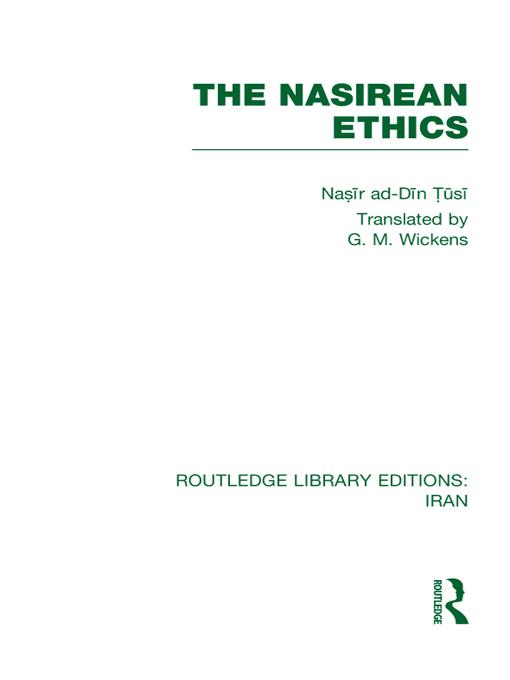
The Nasirean Ethics is the best known ethical digest to be composed in medieval Persia, if not in all mediaeval Islam. It appeared initially in 633/1235 when Tūsī was already a celebrated scholar, scientist, politico-religious propagandist. The work has a special significance as being composed by an outstanding figure at a crucial time in the history he was himself helping to shape: some twenty years later Tūsī was to cross the greatest psychological watershed in Islamic civilization, playing a leading part in the capture of Baghdad and the extinction of the generally acknowledged Caliphate there. In this work the author is primarily concerned with the criteria of human behaviour: first in terms of space and priority allotted, at the individual level, secondly, at the economic level and thirdly at the political level.
Pay easily by card, Klarna, Apple Pay or Google Pay. Not happy? You always have a 14-day money-back guarantee. Read more in our terms. If you have any questions, email us at hello@memmo.org.
Memmo makes studying easier – wherever you are in the world. We bring your course books and smart study tools together in one place: summaries, quizzes, podcasts and flashcards. Plus Ted, your study buddy who answers anything you wonder. Over 50,000 students already study here – built to help you learn faster and stress less.