
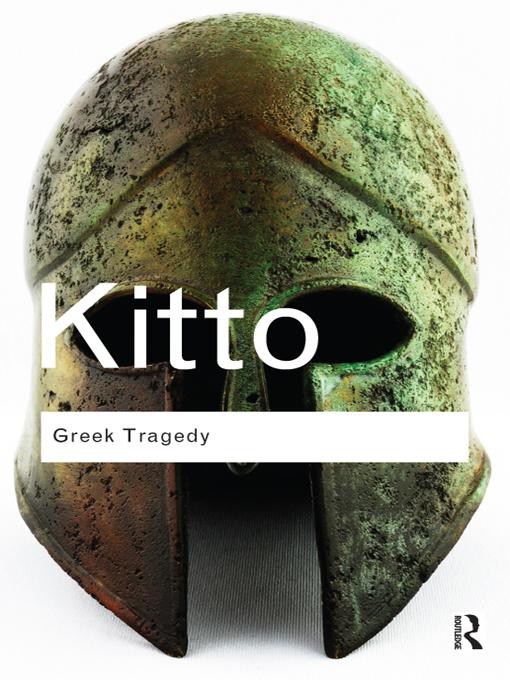
Why did Aeschylus characterize differently from Sophocles? Why did Sophocles introduce the third actor? Why did Euripides not make better plots? So asks H.D.F Kitto in his acclaimed study of Greek tragedy, available for the first time in Routledge Classics.
Kitto argues that in spite of dealing with big moral and intellectual questions, the Greek dramatist is above all an artist and the key to understanding classical Greek drama is to try and understand the tragic conception of each play. In Kitto’s words ‘We shall ask what the dramatist is striving to say, not what in fact he does say about this or that.’ Through a brilliant analysis of Aeschylus’s ‘Oresteia’, the plays of Sophocles including ‘Antigone’ and ‘Oedipus Tyrannus’; and Euripides’s ‘Medea’ and ‘Hecuba’, Kitto skilfully conveys the enduring artistic and literary brilliance of the Greek dramatists.
Pay easily by card, Klarna, Apple Pay or Google Pay. Not happy? You always have a 14-day money-back guarantee. Read more in our terms. If you have any questions, email us at hello@memmo.org.
Memmo makes studying easier – wherever you are in the world. We bring your course books and smart study tools together in one place: summaries, quizzes, podcasts and flashcards. Plus Ted, your study buddy who answers anything you wonder. Over 75,000 students already study here – built to help you learn faster and stress less.