
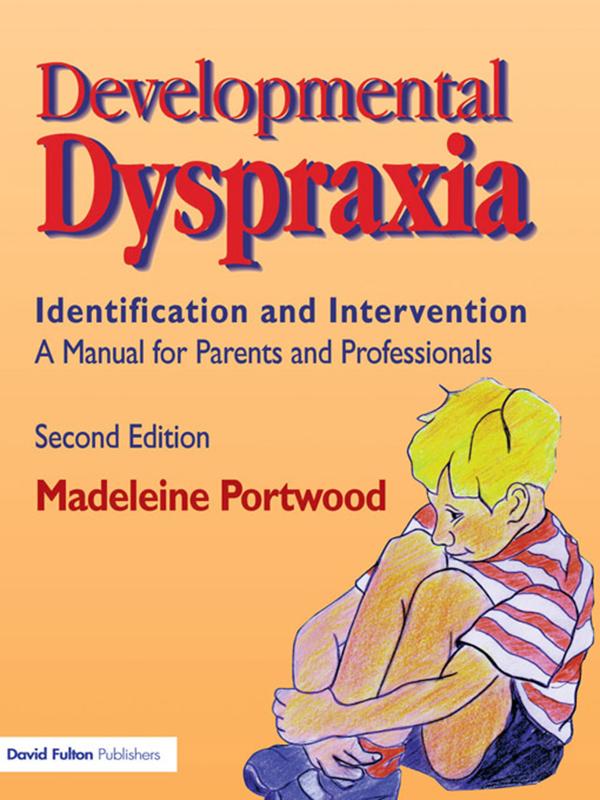
First published in 2007. Research suggests that between five and ten per cent of all children are dyspraxic. There is much debate about the nature of this disorder and many undiagnosed youngsters are denied access to treatment programmes. In most areas specialist provision is a scarce resource and support, when available, is delivered through parents and teachers. This second edition of Madeleine Portwood's successful manual aims to give parents, teachers and health professionals the confidence to diagnose and assess dyspraxia. Most importantly. it offers them an intervention programme which will significantly improve the cognitive functioning of the dyspraxic child or teenager. Updated in light of the author's new and extensive research, the book provides the reader with: background information on the neurological basis of the condition; strategies for identification/diagnosis and assessment; proven programmes of intervention which can be monitored by anyone closely involved with the child; strategies to improve curricular attainments; remediation activities to develop perceptual and motor skills; programmes to develop self-esteem information about where to find help
Pay easily by card, Klarna, Apple Pay or Google Pay. Not happy? You always have a 14-day money-back guarantee. Read more in our terms. If you have any questions, email us at hello@memmo.org.
Memmo makes studying easier – wherever you are in the world. We bring your course books and smart study tools together in one place: summaries, quizzes, podcasts and flashcards. Plus Ted, your study buddy who answers anything you wonder. Over 50,000 students already study here – built to help you learn faster and stress less.
You might also like
Buy the book0