
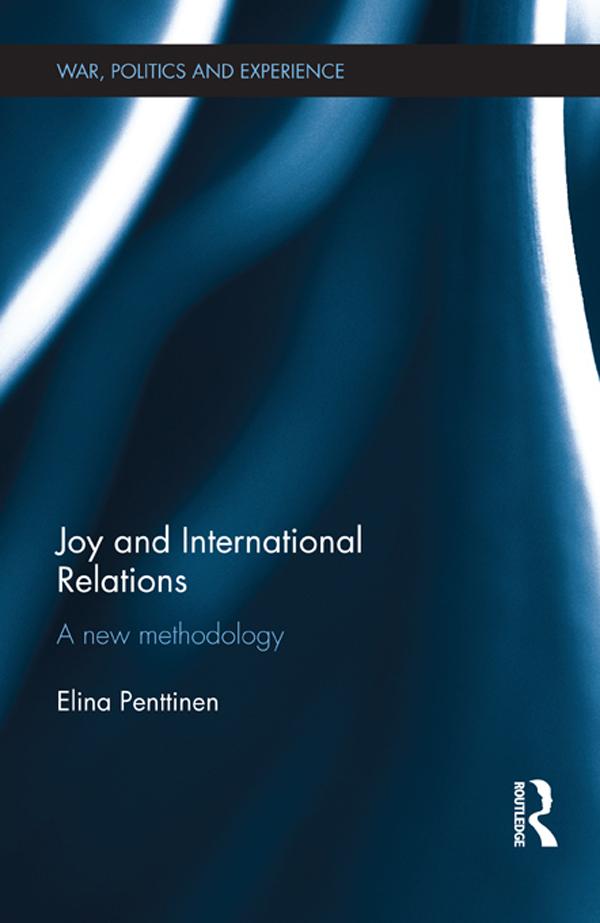
This book aims to develop new methodology for the study of international relations (IR) based on joy, informed by current thinking about posthumanism, feminist theory and positive psychology.
It examines how the mechanistic-deterministic worldview derived from the Newtonian model has influenced the epistemology and methodology of IR (i.e., the idea that the world is constituted of independent fragments), and seeks ways to develop a new methodology for IR by drawing on the potential of a non-fragmented worldview. The author argues that it is this modern Western view of human beings (or societies) as isolated and separate from the world that prevents IR from finding new solutions to the questions of war and conflict.
Drawing upon case studies, testimonies and examples from film, this book instead proposes joy as an alternative methodology for studying IR, exploring the possibility of self-healing in physical and emotional trauma in extreme violent conditions.The author also discusses how posthumanism contributes to positive psychology in understanding happiness and empowerment, and demonstrates how these findings can further widen the study of IR.
This book will be of much interest to students of gender studies, war and conflict studies, IR theory and critical security studies.
Pay easily by card, Klarna, Apple Pay or Google Pay. Not happy? You always have a 14-day money-back guarantee. Read more in our terms. If you have any questions, email us at hello@memmo.org.
Memmo makes studying easier – wherever you are in the world. We bring your course books and smart study tools together in one place: summaries, quizzes, podcasts and flashcards. Plus Ted, your study buddy who answers anything you wonder. Over 50,000 students already study here – built to help you learn faster and stress less.