
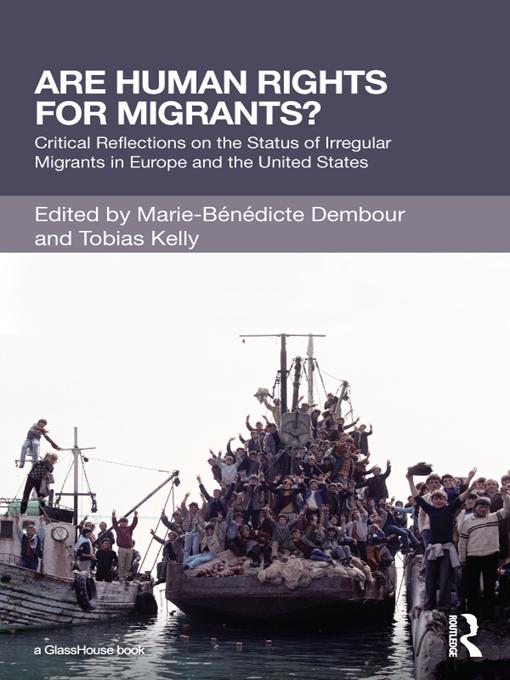
Human rights seemingly offer universal protection. However, irregular migrants have, at best, only problematic access to human rights. Whether understood as an ethical injunction or legally codified norm, the promised protection of human rights seems to break down when it comes to the lived experience of irregular migrants. This book therefore asks three key questions of great practical and theoretical importance. First, what do we mean when we speak of human rights? Second, is the problematic access of irregular migrants to human rights protection an issue of implementation, or is it due to the inherent characteristics of the concept of human rights? Third, should we look beyond human rights for an effective source of protection? Written is an accessible style, with a range of socio-legal and doctrinal approaches, the chapters focus on the situation of the irregular migrant in Europe and the United States. Throughout the book, nuanced theoretical debates are put in the context of concrete case studies. The critical reflections it offers on the limitations and possibilities of human rights protections for irregular migrants will be invaluable for students, scholars and practitioners.
Pay easily by card, Klarna, Apple Pay or Google Pay. Not happy? You always have a 14-day money-back guarantee. Read more in our terms. If you have any questions, email us at hello@memmo.org.
Memmo makes studying easier – wherever you are in the world. We bring your course books and smart study tools together in one place: summaries, quizzes, podcasts and flashcards. Plus Ted, your study buddy who answers anything you wonder. Over 50,000 students already study here – built to help you learn faster and stress less.