
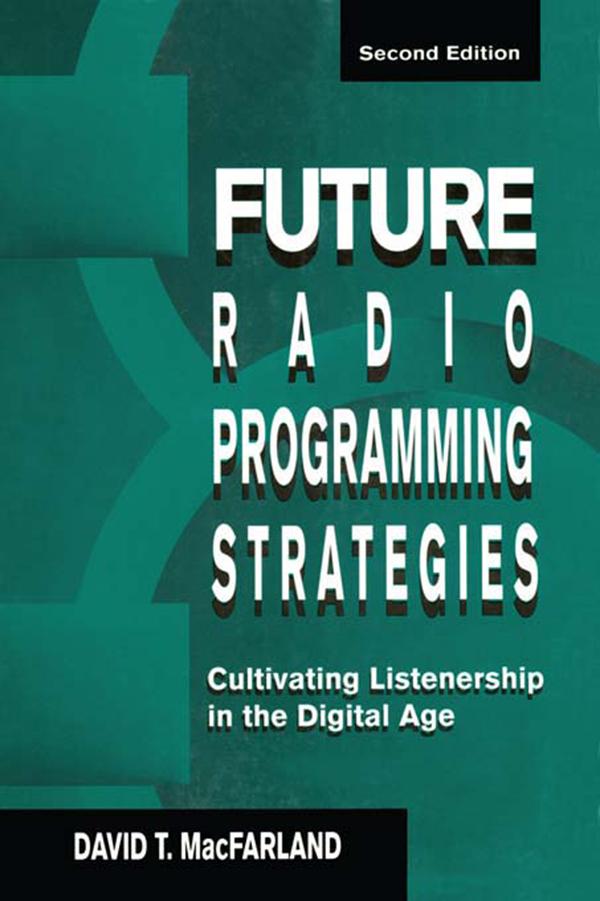
Fundamental beliefs is what the reader will be exploring here -- a common understanding of what the radio enterprise should be about: entertainment and information. A major thrust of this book is to arrive at a set of fundamental beliefs about the values and realities of the radio business in regard to entertainment programming -- a set of beliefs that may or may not be right, true, or forever, but that might at least provide a basis for developing programming strategies.
This second edition of Future Radio Programming Strategies seeks to answer the question: "What do listeners really want from radio?" Some of the answers are derived from "users-and-gratifications" research in the mass media. Instead of focusing on what mass media do to people, the users-and-gratifications perspective seeks to discover what people do with mass media. The functionalist viewpoint of such research basically says that a medium is best defined by how people use it. Having looked at some of the audience research that comes from sources other than the standard ratings companies, the book then goes on to demonstrate new ways that formats, production procedures, and announcing styles can meet audience needs and desires. Although the volume concludes with several original methods for selecting and presenting airplay music based on the audience's moods and emotional needs, it does not insist upon a singular, formulaic approach for constructing or modifying a music format. Instead, it attempts to involve the reader in thinking through the process of format development.
Two audio tapes are also available for use with the book. The tapes contain nearly 3 hours of important, detailed information and provocative points from the book. Exclusive audio examples include:
* the sense of acoustic space in music;
* hi-fi versus lo-fi listening environments;
* subjective perception of the announcer's distance from the listener;
* audio editing rates;
* comparison of luxury versus inexpensive car listening experiences; and
* the components of emotions that are expressed vocally.
The tapes also include new sections about the threats to traditional radio from specialized digital audio services, competition for the listener's attention from computer-based media, and additional proof of how music can be chosen on the basis of listeners' emotional reactions and mood needs.
Pay easily by card, Klarna, Apple Pay or Google Pay. Not happy? You always have a 14-day money-back guarantee. Read more in our terms. If you have any questions, email us at hello@memmo.org.
Memmo makes studying easier – wherever you are in the world. We bring your course books and smart study tools together in one place: summaries, quizzes, podcasts and flashcards. Plus Ted, your study buddy who answers anything you wonder. Over 50,000 students already study here – built to help you learn faster and stress less.