
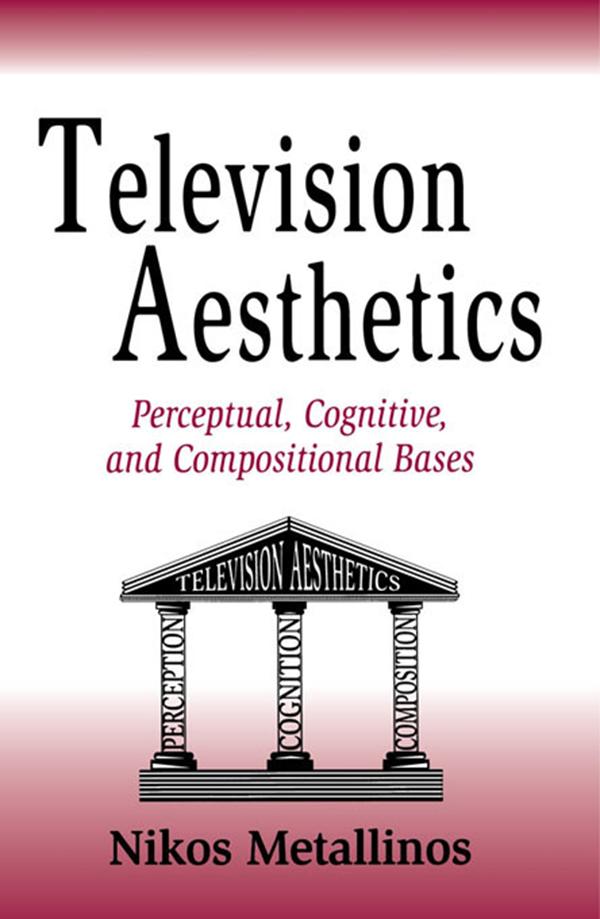
USE FIRST TWO PARAGRAPHS ONLY FOR GENERAL CATALOGS... This volume offers a response to three ongoing needs:
* to develop the main composition principles pertinent to the visual commmunication medium of television;
* to establish the field of television aesthetics as an extension of the broader field of visual literacy; and
* to promote television aesthetics to both students and consumers of television.
Based on effective empirical research from three axes -- perception, cognition, and composition -- the aesthetic principles of television images presented are drawn from converging research in academic disciplines such as psychology (perceptual, cognitive, and experimental), neurophysiology, and the fine arts (painting, photography, film, theater, music, and more). Although the aesthetics of the fine arts were traditionally built on contextual theories that relied heavily on subjective evaluation, on critical analyses, and on descriptive research methods, the aesthetics of today's visual communication media consider equally valuable empirical methodologies found in all sciences. Investigations in these different academic disciplines have provided the constructs and strengthened the foundations of the theory of television aesthetics offered in this book.
Special features include:
* a great variety of pictures supporting the topics discussed;
* a thorough, up-to-date, and specifically related bibliography for each of the major parts of the book;
* computer drawings illustrating the concepts examined in the text;
* scientific data -- tables and charts -- documenting the research findings cited;
* simplified explanations of the processes of visual, auditory, and motion perceptions of images, enhanced by specific diagrams;
* detailed analyses of the threefold process of stimulation, perception, and recognition of televised images; and
* workable, easy-to-understand and use rules of picture composition, visual image evaluations, and television program appreciation.
Pay easily by card, Klarna, Apple Pay or Google Pay. Not happy? You always have a 14-day money-back guarantee. Read more in our terms. If you have any questions, email us at hello@memmo.org.
Memmo makes studying easier – wherever you are in the world. We bring your course books and smart study tools together in one place: summaries, quizzes, podcasts and flashcards. Plus Ted, your study buddy who answers anything you wonder. Over 50,000 students already study here – built to help you learn faster and stress less.