
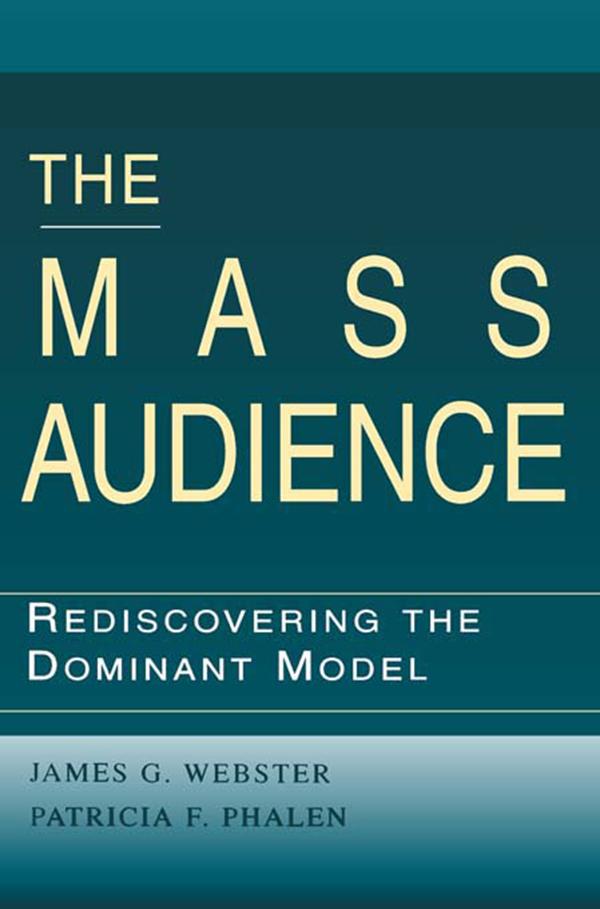
In the early 20th century, a new and distinctive concept of the audience rose to prominence. The audience was seen as a mass -- a large collection of people mostly unknown to one another -- that was unified through exposure to media. This construct offered a pragmatic way to map audiences that was relevant to industry, government, and social theorists. In a relatively short period of time, it became the dominant model for studying the audience. Today, it is so pervasive that most people simply take it for granted.
Recently, media scholars have reopened inquiry into the meaning of "audience." They question the utility of the mass audience concept, characterizing it as insensitive to differences among audience members inescapably bound up with discredited notions of mass society, or serving only a narrow set of industrial interests. The authors of this volume find that these assertions are often false and unwarranted either by the historical record or by contemporary industry practice.
Instead, they argue for a rediscovery of the dominant model by summarizing and critiquing the very considerable body of literature on audience behavior, and by demonstrating different ways of analyzing mass audiences. Further, they provide a framework for understanding the future of the audience in the new media environment, and suggest how the concept of mass audience can illuminate research on media effects, cultural studies, and media policy.
Pay easily by card, Klarna, Apple Pay or Google Pay. Not happy? You always have a 14-day money-back guarantee. Read more in our terms. If you have any questions, email us at hello@memmo.org.
Memmo makes studying easier – wherever you are in the world. We bring your course books and smart study tools together in one place: summaries, quizzes, podcasts and flashcards. Plus Ted, your study buddy who answers anything you wonder. Over 50,000 students already study here – built to help you learn faster and stress less.
You might also like
Buy the book0