
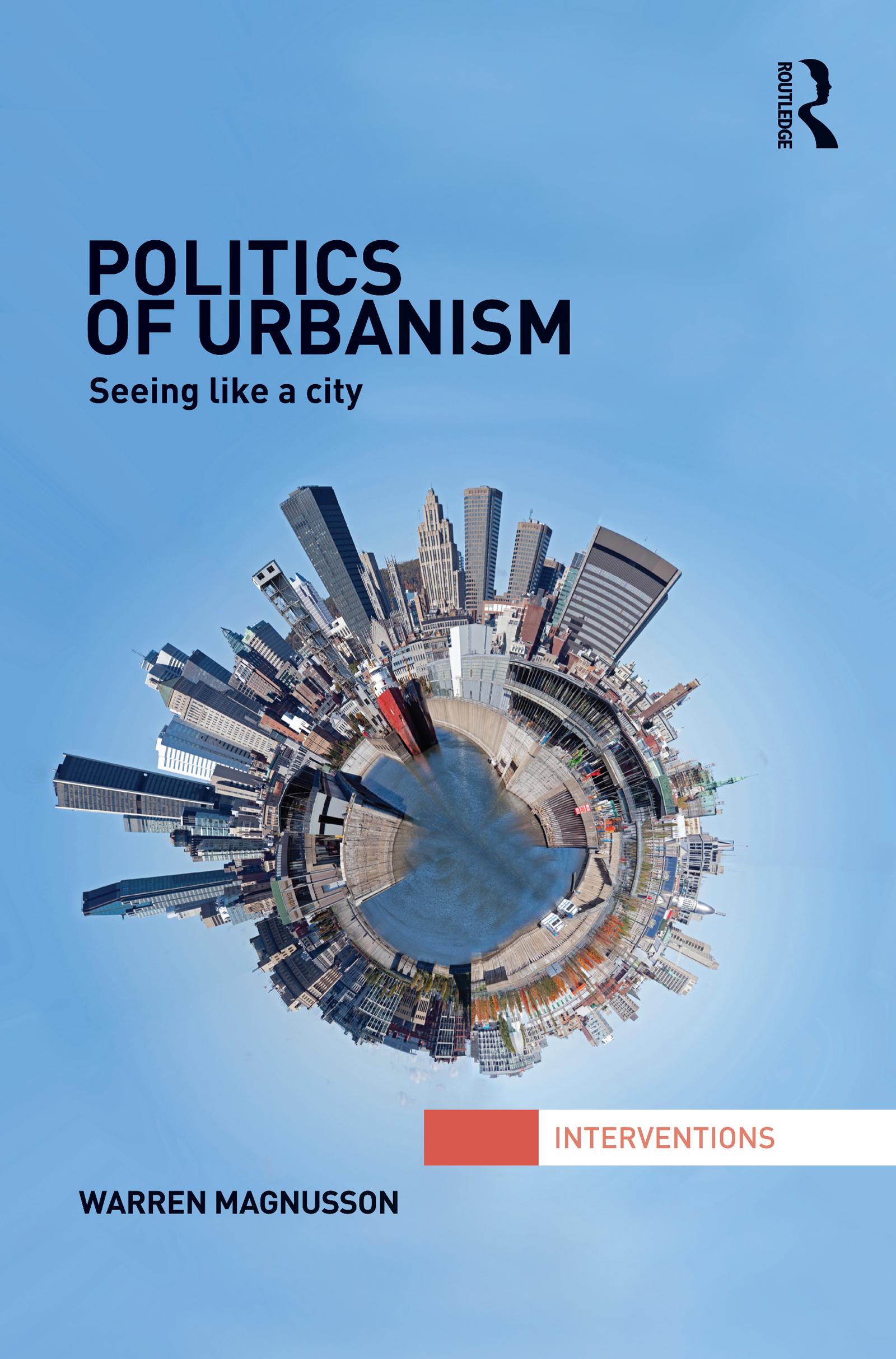
To see like a city, rather than seeing like a state, is the key to understanding modern politics. In this book, Magnusson draws from theorists such as Weber, Wirth, Hayek, Jacobs, Sennett, and Foucault to articulate some of the ideas that we need to make sense of the city as a form of political order.
Locally and globally, the city exists by virtue of complicated patterns of government and self-government, prompted by proximate diversity. A multiplicity of authorities in different registers is typical. Sovereignty, although often claimed, is infinitely deferred. What emerges by virtue of self-organization is not susceptible to control by any central authority, and so we are impelled to engage politically in a world that does not match our expectations of sovereignty. How then are we are to engage realistically and creatively? We have to begin from where we are if we are to understand the possibilities.
Building on traditions of political and urban theory in order to advance a new interpretation of the role of cities/urbanism in contemporary political life, this work will be of great interest to scholars of political theory and urban theory, international relations theory and international relations.
Pay easily by card, Klarna, Apple Pay or Google Pay. Not happy? You always have a 14-day money-back guarantee. Read more in our terms. If you have any questions, email us at hello@memmo.org.
Memmo makes studying easier – wherever you are in the world. We bring your course books and smart study tools together in one place: summaries, quizzes, podcasts and flashcards. Plus Ted, your study buddy who answers anything you wonder. Over 50,000 students already study here – built to help you learn faster and stress less.