
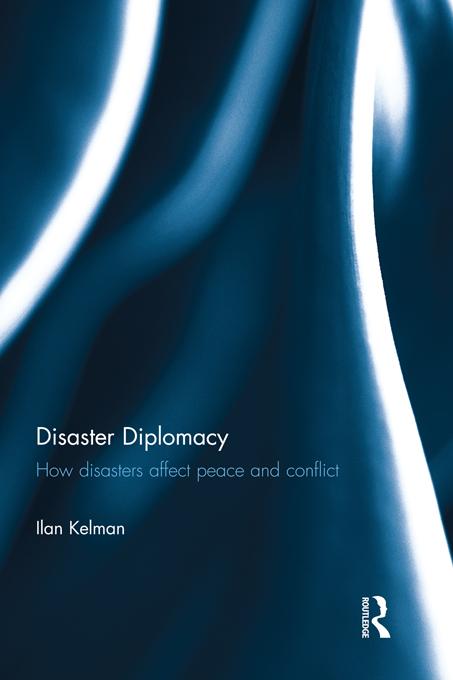
When an earthquake hits a war zone or cyclone aid is flown in by an enemy, many ask: Can catastrophe bring peace? Disaster prevention and mitigation provide similar questions. Could setting up a flood warning system bring enemy countries together? Could a regional earthquake building code set the groundwork for wider regional cooperation?
This book examines how and why disaster-related activities do and do not create peace and reduce conflict. Disaster-related activities refer to actions before a disaster such as prevention and mitigation along with actions after a disaster such as emergency response, humanitarian relief, and reconstruction. This volume investigates disaster diplomacy case studies from around the world, in a variety of political and disaster circumstances, from earthquakes in Greece and Turkey affecting these neighbours’ bilateral relations to volcanoes and typhoons influencing intra-state conflict in the Philippines. Dictatorships are amongst the case studies, such as Cuba and Burma, along with democracies such as the USA and India. No evidence is found to suggest that disaster diplomacy is a prominent factor in conflict resolution. Instead, disaster-related activities often influence peace processes in the short-term—over weeks and months—provided that a non-disaster-related basis already existed for the reconciliation. That could be secret negotiations between the warring parties or strong trade or cultural links. Over the long-term, disaster-related influences disappear, succumbing to factors such as a leadership change, the usual patterns of political enmity, or belief that an historical grievance should take precedence over disaster-related bonds.
This is the first book on disaster diplomacy. Disaster-politics interactions have been studied for decades, but usually from a specific political framing, covering a specific geographical area, or from a specific disaster framing. As well, plenty of quantitative work has been completed, yet the data limitations are rarely admitted openly or thoroughly analysed. Few publications bring together the topics of disasters and politics in terms of a disaster diplomacy framework, yielding a grounded, qualitative, scientific point of view on the topic.
Pay easily by card, Klarna, Apple Pay or Google Pay. Not happy? You always have a 14-day money-back guarantee. Read more in our terms. If you have any questions, email us at hello@memmo.org.
Memmo makes studying easier – wherever you are in the world. We bring your course books and smart study tools together in one place: summaries, quizzes, podcasts and flashcards. Plus Ted, your study buddy who answers anything you wonder. Over 50,000 students already study here – built to help you learn faster and stress less.