
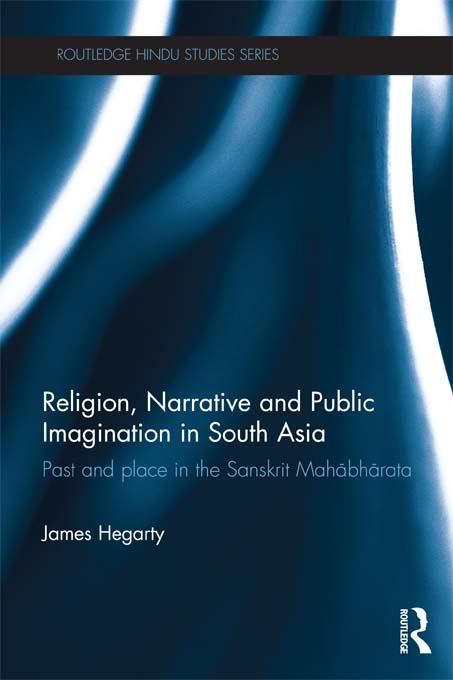
The Sanskrit Mahabharata is one of the greatest works of world literature and pivotal for the understanding of both Hindu traditions and wider society in ancient, medieval and modern South Asia. This book presents a new synthesis of philological, anthropological and cognitive-linguistic method and theory in relation to the study of narrative text by focusing on the form and function of the Mahabharata in the context of early South Asia.
Arguing that the combination of structural and thematic features that have helped to establish the enduring cultural centrality of religious narrative in South Asia was first outlined in the text, the book highlights the Mahabharata’s complex orientation to the cosmic, social and textual past. The book shows the extent to which narrative is integral to human social life, and more generally the creation and maintenance of religious ideologies. It highlights the contexts of origin and transmission and the cultural function of the Mahabharata in first millennium South Asia and, by extension, in medieval and modern South Asiaby drawing on both textual and epigraphic sources. The book draws attention to what is culturally specific about the origination and transmission of early South Asian narrative and what can be used to enrich our orientation to narrative in human social life more globally.
Pay easily by card, Klarna, Apple Pay or Google Pay. Not happy? You always have a 14-day money-back guarantee. Read more in our terms. If you have any questions, email us at hello@memmo.org.
Memmo makes studying easier – wherever you are in the world. We bring your course books and smart study tools together in one place: summaries, quizzes, podcasts and flashcards. Plus Ted, your study buddy who answers anything you wonder. Over 50,000 students already study here – built to help you learn faster and stress less.