
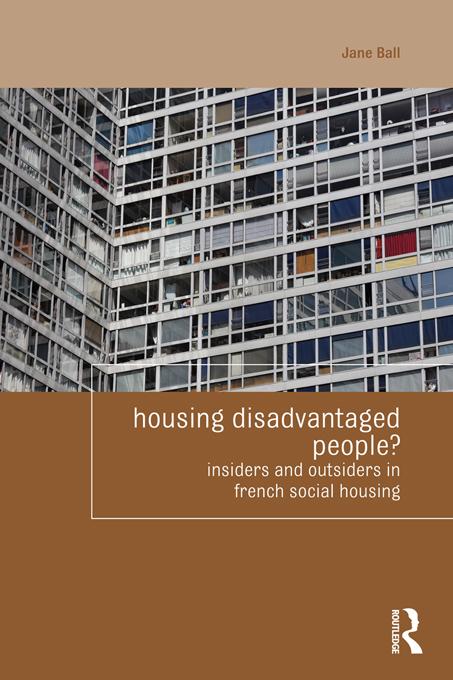
Social housing appears to offer a solution for the housing of poor and disadvantaged people. The French "right to housing" offers poor and disadvantaged citizens priority in social housing allocation, and even a legal action against the State to obtain a social home. Despite this, France is suffering a long-lasting housing crisis with disadvantaged people having particular difficulties of access, often despite the efforts of local housing actors. This situation is affected by the European Court of Human Rights and EU decisions limiting diverse national housing and rental policies.
Between historic French revolutions and the modern riots, negotiated solutions to social dilemmas emerged. Despite progress in constitutional principles, complex local negotiations still ultimately determine who is housed. Local social landlords, mayors and employee and tenant representatives use their privileges to house their insiders: existing tenants, locals and employees, with rent insufficiently subsidized. ‘Insider Outsider’ theory is used for an economic analysis of exclusion in social housing allocation: its processes, institutional context, and stigmatizing effects. This highlights the spatial effects of nimbyism, excluding disadvantaged outsiders, and concentrating them in deprived areas. Simultaneously, urban regeneration reduced affordable housing stock and ‘social mix’ became a reason to refuse a social home.
History, comparative law, economic theory and local interviews with housing actors give a detailed picture of what happens in and around French social housing allocation for an interdisciplinary housing policy audience. Constitutional principles appear in an unfamiliar guise as negotiating positions, with the "right to property" supporting landlords and the "right to housing" supporting tenants. French debates about the function of social landlords are echoed across Europe and reflected in European policies concerning rights, and the exclusion of disadvantaged minorities.
Pay easily by card, Klarna, Apple Pay or Google Pay. Not happy? You always have a 14-day money-back guarantee. Read more in our terms. If you have any questions, email us at hello@memmo.org.
Memmo makes studying easier – wherever you are in the world. We bring your course books and smart study tools together in one place: summaries, quizzes, podcasts and flashcards. Plus Ted, your study buddy who answers anything you wonder. Over 75,000 students already study here – built to help you learn faster and stress less.