
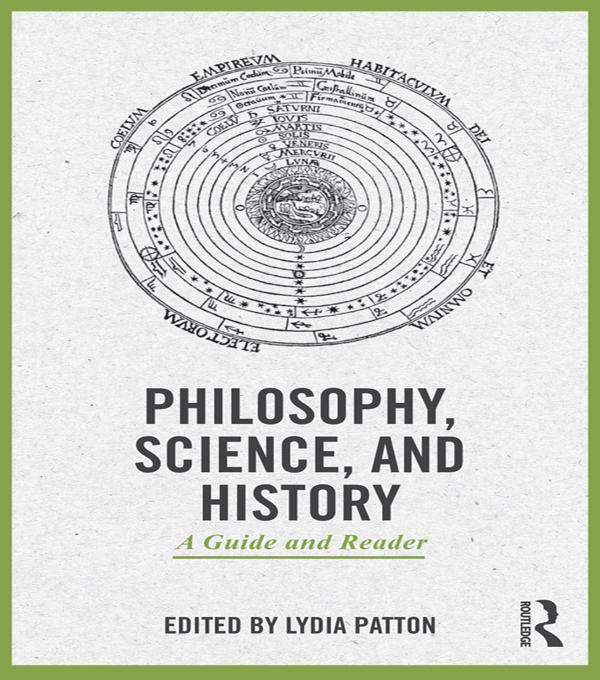
Philosophy, Science, and History: A Guide and Reader is a compact overview of the history and philosophy of science that aims to introduce students to the groundwork of the field, and to stimulate innovative research. The general introduction focuses on scientific theory change, assessment, discovery, and pursuit. Part I of the Reader begins with classic texts in the history of logical empiricism, including Reichenbach’s discovery-justification distinction. With careful reference to Kuhn’s analysis of scientific revolutions, the section provides key texts analyzing the relationship of HOPOS to the history of science, including texts by Santayana, Rudwick, and Shapin and Schaffer. Part II provides texts illuminating central debates in the history of science and its philosophy. These include the history of natural philosophy (Descartes, Newton, Leibniz, Kant, Hume, and du Châtelet in a new translation); induction and the logic of discovery (including the Mill-Whewell debate, Duhem, and Hanson); and catastrophism versus uniformitarianism in natural history (Playfair on Hutton and Lyell; de Buffon, Cuvier, and Darwin).
The editor’s introductions to each section provide a broader perspective informed by contemporary research in each area, including related topics. Each introduction furnishes proposals, including thematic bibliographies, for innovative research questions and projects in the classroom and in the field.
Pay easily by card, Klarna, Apple Pay or Google Pay. Not happy? You always have a 14-day money-back guarantee. Read more in our terms. If you have any questions, email us at hello@memmo.org.
Memmo makes studying easier – wherever you are in the world. We bring your course books and smart study tools together in one place: summaries, quizzes, podcasts and flashcards. Plus Ted, your study buddy who answers anything you wonder. Over 50,000 students already study here – built to help you learn faster and stress less.